

NEUROLOGY
Neurology runs across six subspecialties on one phone line: headache, epilepsy, MS, movement disorders, stroke, and dementia. Assort routes every referral to the right care path, books infusions on the right cadence, and handles post-hospital follow-up before patients fall out of care.

Trusted by leading neurology groups





Every referral routed to the right subspecialist, every infusion booked on cadence, every post-discharge follow-up scheduled on time. Patients can reach your practice 24/7 and your team only handles interactions that truly need them.
.svg)
Trained on real neurology workflows, from six-way subspecialty routing to MS infusion cadences and stroke follow-up urgency windows, so appointments are booked and patient needs are triaged with accuracy

Every action syncs directly to your EHR in real time. Appointments booked, tasks created, records updated.
.svg)
Synapse, Assort's automated implementation engine, is trained on care protocols other AI hasn't seen yet. Launch in weeks with no ongoing tuning needed.
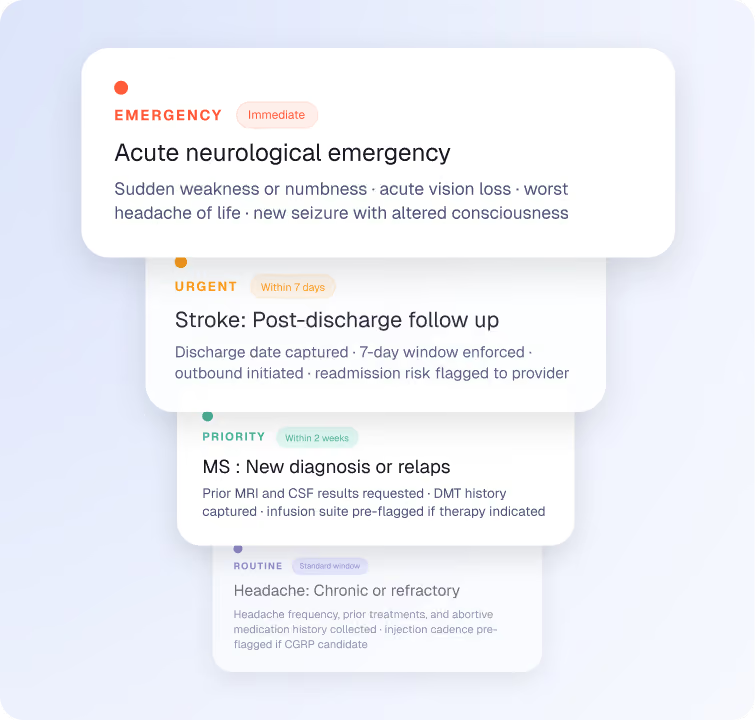
Neurology isn't one practice. It's six: headache, epilepsy, MS, movement disorders, stroke, and dementia. When a referral comes in, Assort reads the clinical detail, screens for the right subspecialty, and books with the right intake. Patients get to the right neurologist on the first try, and incorrect routing stops delaying diagnosis.
MS and migraine patients run on tight infusion cadences with chair time, pre-medication windows, session duration, and monitoring all in play. Assort books each infusion with the right chair and provider availability, builds in pre-med time automatically, and runs the outreach cadence between visits so no patient misses their window. Patients stay on schedule and chairs stay full.
.avif)
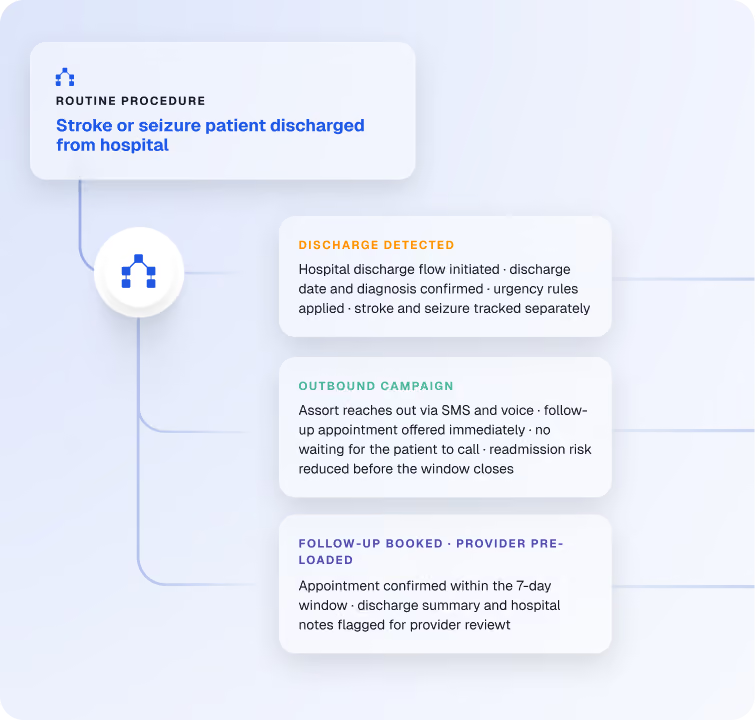
Stroke and seizure patients need follow-up within 7 days of discharge, and missing the window means real readmission risk. Assort handles hospital discharge flows automatically, applies your urgency rules, and runs outbound to book the follow-up before patients fall out of care. High-acuity patients stop slipping through after a hospital stay.
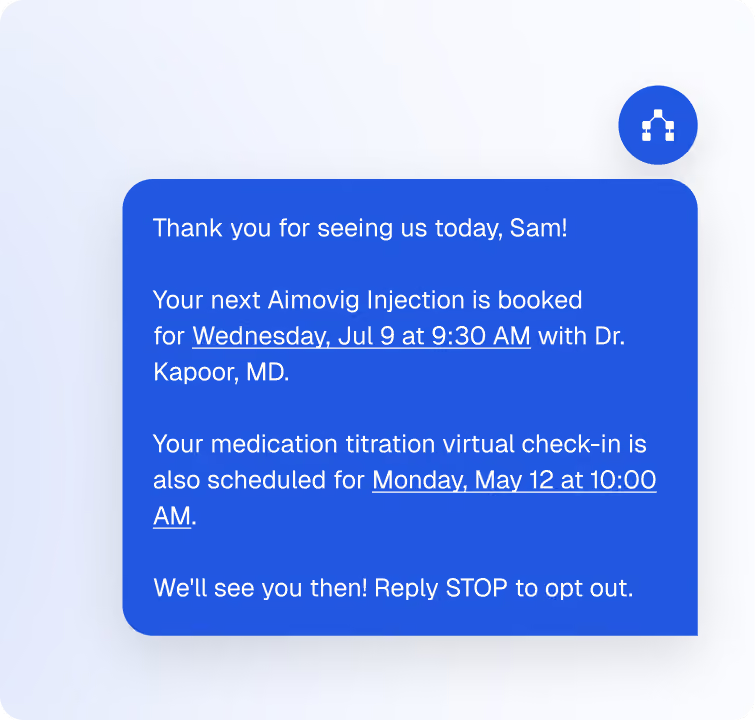
Headache patients run on a different cadence than the rest of neurology: medication titration check-ins, scheduled injections every 12 weeks, and telehealth-eligible visits for routine management. Assort applies the right cadence per patient, books injections on the 12-week interval, and routes medication checks to telehealth when appropriate. Headache clinic stays organized without burning provider time on routine medication management.
Native integration with the EHRs neurology practices run on.




One platform for every patient access workflow your practice runs.
REAL PRACTICES, PROVEN OUTCOMES
Real results from neurology practices running Assort to handle inbound calls, run outbound campaigns, and keep schedules full.




Assort Health has completely transformed how we manage patient access. It handles scheduling over 100 providers across 6 specialties with precision... patients get through faster, our staff can focus on care, and we're seeing meaningful gains in both satisfaction and revenue.


Assort didn’t just solve a staffing challenge — it accelerated our strategic roadmap. We were missing a third of our 10,000 monthly calls despite a strong front-office team. With Assort, we automated call handling, freed up staff capacity, and improved scheduling speed... It’s allowed us to deliver faster, smarter care at scale.”


Calls are answered instantly, and our outbound campaigns have helped us book appointments at a rate we simply couldn’t achieve before. It’s improved efficiency on our end and, more importantly, created a better experience for patients at every interaction.

The best voice AI for neurology practices handles the workflows neurology groups actually run: subspecialty referral routing across headache, epilepsy, MS, movement disorders, stroke, and dementia, infusion suite scheduling on tight cadences, post-hospital stroke and seizure follow-up within 7 days, and headache management with injection cadence scheduling and telehealth eligibility. Assort is built specifically for this, with native integration across the EHRs neurology practices actually use.
Neurology has six distinct subspecialties (headache, epilepsy, MS, movement, stroke, dementia), each with different providers and intake requirements. Voice AI like Assort reads the clinical detail of the referral, screens for the right subspecialty, and books with the right intake workflow. Referrals stop sitting in fax queues, and patients get to the right neurologist on the first try.
MS and migraine patients run on tight infusion cadences with chair time, pre-medication windows, session duration, and monitoring all in play. Assort books each infusion with the right chair and provider availability, builds in pre-med time automatically, and runs the recall cadence between visits so no patient misses their window. Patients stay on schedule and chairs stay full.
Post-hospital follow-up within 7 days of discharge is the strongest predictor of avoiding readmission for stroke and seizure patients. Voice AI like Assort handles hospital discharge flows automatically, applies urgency rules, and runs outbound to book the follow-up before the window closes. High-acuity patients stop slipping through after a hospital stay.
An offshore answering service takes a message; voice AI completes the task. Assort applies neurology-specific rules including subspecialty routing across six conditions, infusion cadence enforcement, post-hospital urgency windows, and injection interval scheduling, books appointments directly in your EHR, and operates 24/7 in 29 languages. Most neurology practices switch from offshore for this reason.
In 20 minutes, we’ll route a subspecialty referral, book an MS infusion, and sync everything to your EHR.
Trusted across 20+ specialties · Deployed in weeks, not months · Expert onboarding included





.svg)
.svg)
.svg)
.svg)
.svg)
.svg)
.svg)
.svg)

