
Intelligent Triage & Routing
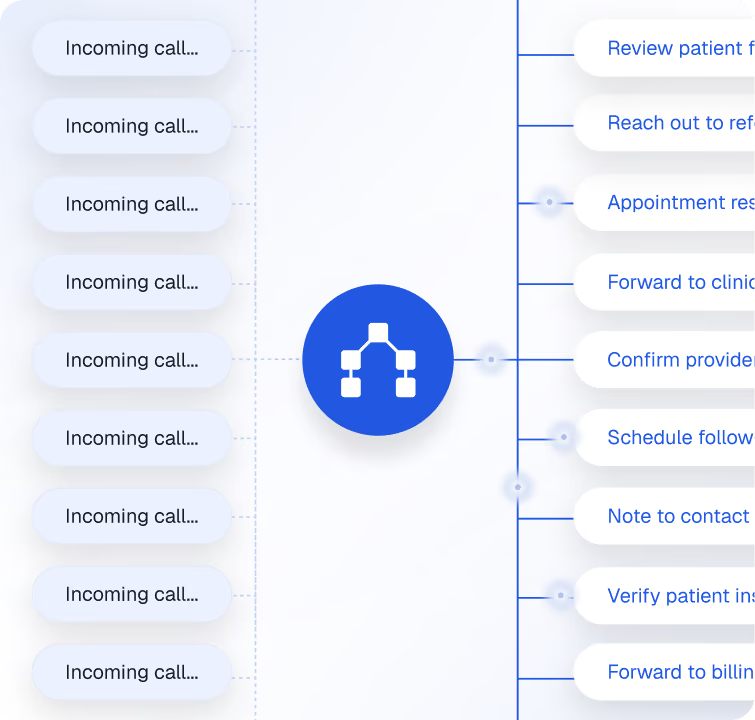
Assort AI agents assess patient intent and urgency in real time, routing every caller to the right next step without phone trees, hold times, or staff intervention.


.svg)
.svg)


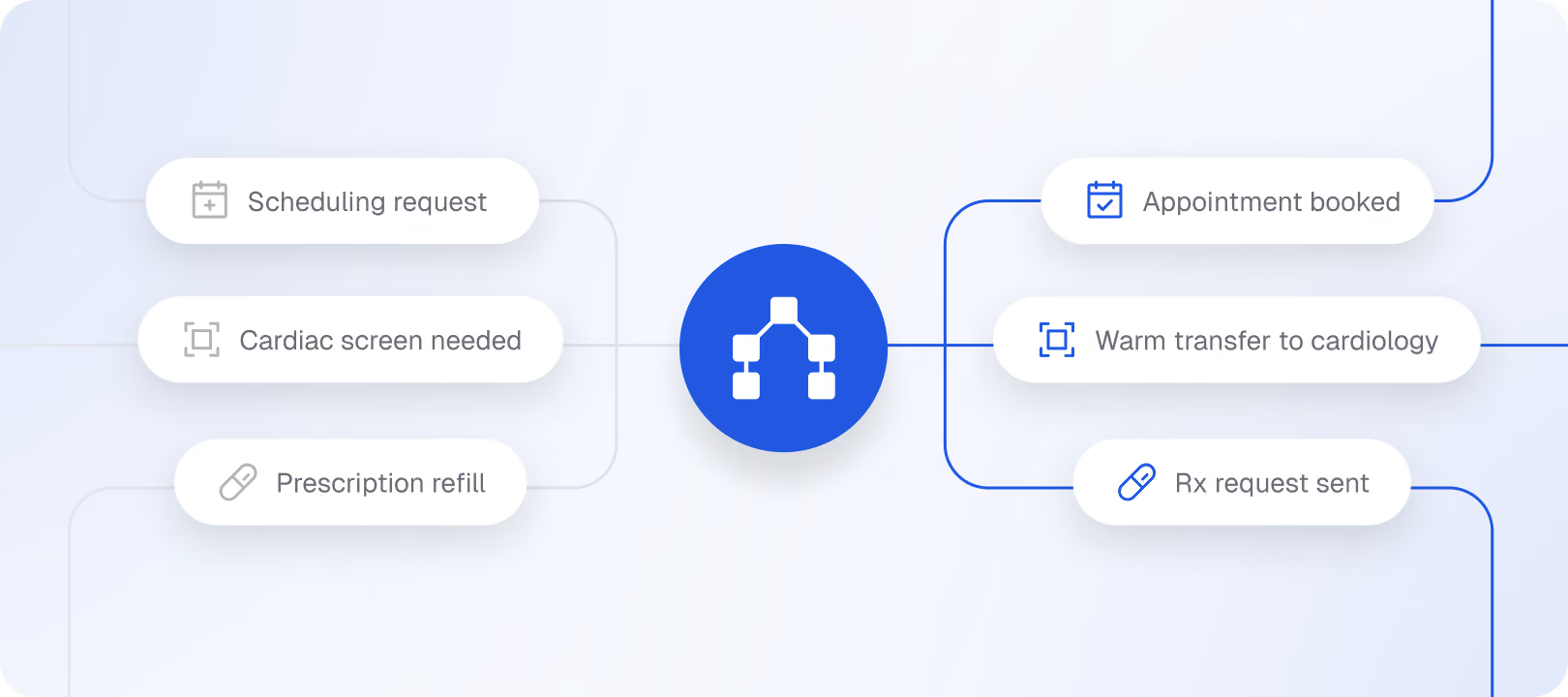
The AI agent identifies why a patient is calling from the moment they speak. No button-pressing, no misroutes, no dropped context.
Provider rules, department configurations, and clinical context are applied in real time so every caller reaches the right team, every time.
When a call transfers to a staff member, they receive a full summary before they pick up so patients don’t need to repeat themselves.
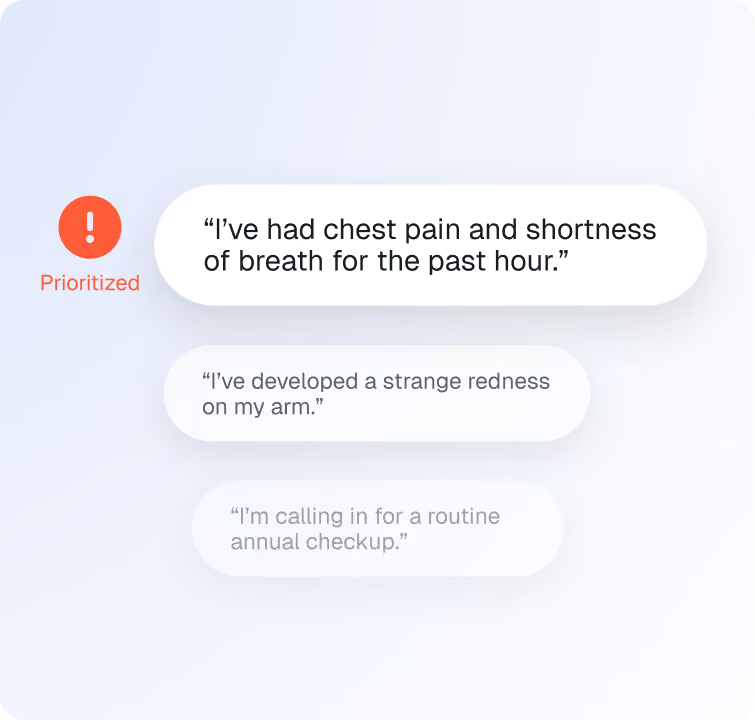
AI agents collect symptoms and urgency signals during the call and routes accordingly.
Urgent calls outside business hours are assessed and escalated to on-call providers through existing on-call integrations.
Non-urgent callers who can't be immediately served are queued with their full context preserved, so staff follow up with everything they need.
The majority of inbound calls are assessed, routed, and resolved by AI agents, without requiring staff to pick up.
Calls that require clinical follow-up generate EHR-native tasks automatically, so nothing falls through after the call ends.
When escalation is needed, staff receive a full summary before they pick up so patients don’t need to repeat themselves.
why assort
.svg)
.svg)



Assort Health has completely transformed how we manage patient access. It handles scheduling over 100 providers across 6 specialties with precision... patients get through faster, our staff can focus on care, and we're seeing meaningful gains in both satisfaction and revenue.


Assort Health's AI seamlessly navigates our scheduling algorithms like a top-tier operator, scheduling appointments with remarkable precision and care. In just 30 days, we cut hold times from 11 minutes to 1 minute and booked more accurate appointments.


We've seen a significant lift in patient conversions and appointment bookings. Just as importantly, our patients no longer wait on hold — calls are answered instantly, and our staff can focus on delivering a great experience rather than managing phone queues.
AI patient triage is the use of AI agents to assess a patient's reason for calling, collect relevant clinical context, and route them to the appropriate next step — without requiring staff to screen every inbound call. Instead of pressing buttons or waiting on hold, patients state their needs in natural language. Assort's AI agent classifies intent and urgency in real time, applying specialty-specific routing logic to direct each caller accurately — to scheduling, a clinical team, urgent care, or a prioritized callback queue.
Traditional IVR systems force patients through rigid phone trees that can't respond to nuance, clinical urgency, or specialty-specific needs. Assort replaces the IVR entirely; patients speak naturally, and the AI agent understands their intent from the first sentence. Every routing decision is informed by specialty logic, provider configuration, and patient journey memory, so calls reach the right place without the friction that causes patients to hang up.
Healthcare call routing software directs inbound patient calls to the appropriate department, provider, or workflow. The most important factors are specialty configurability, real-time urgency assessment, EHR integration, and the ability to carry patient context through every handoff. Generic call routing tools route based on simple rules. Assort routes based on clinical context, specialty-specific logic, and a dataset of 250M+ patient interactions so routing decisions are accurate from day one, across your most complex scenarios.
Assort is designed to expand your team's capacity, not replace it. AI agents handle the high-volume, repeatable work — intent classification, routing, urgency triage, and EHR task creation, freeing staff to focus on interactions that require human judgment. When escalation is needed, staff receive a full interaction summary through warm handoff, so they pick up with complete context rather than starting from scratch.
Assort's AI agents assess urgency signals and clinical context during every inbound call. Calls that meet urgency thresholds are routed immediately to the appropriate clinical resource – or, after hours, escalated to on-call providers through existing on-call integrations. Non-urgent calls that require follow-up are queued with full context preserved. Specialty-specific logic means urgency thresholds are configured to your practice, not a generic standard.
See how Assort handles your specialty's triage and routing workflows, from intent classification to handoff, in a personalized demo built around your call flows.
Trusted across 20+ specialties · Deployed in weeks, not months · Expert onboarding included