


.svg)

Topics
See it in action
TL;DR
- The debate has moved from "does AI work in healthcare" to "how do we rebuild operations around it."
- Leaders are tired of stitching together point solutions and are increasingly looking for one platform that remembers the patient across every step.
- The metric that matters has shifted from cost savings to growth: more patients seen, faster referral conversion, more provider capacity unlocked.
- The next build target is the entire workflow, not the single task.
- Trust, earned slowly and lost quickly, is becoming the real competitive line.
Topics
TL;DR
- The debate has moved from "does AI work in healthcare" to "how do we rebuild operations around it."
- Leaders are tired of stitching together point solutions and are increasingly looking for one platform that remembers the patient across every step.
- The metric that matters has shifted from cost savings to growth: more patients seen, faster referral conversion, more provider capacity unlocked.
- The next build target is the entire workflow, not the single task.
- Trust, earned slowly and lost quickly, is becoming the real competitive line.
Three days in Sonoma with 200 healthcare organizations, and the question that used to dominate the room barely came up.
A year ago, even in a room full of customers already using AI in production, the conversation kept circling back to whether it could really hold up: handle the referrals, the insurance rules, the specialty scheduling, and the exceptions that rarely fit neatly into a workflow diagram.
Over three days in Sonoma last month, hundreds of executives, operators, physicians, and technical leaders compared notes through keynotes, panels, breakouts, and a lot of hallway conversation. This year, the conversations were different. Organizations were sharing what they'd learned from deploying AI at scale and how it was changing the way their teams worked.


1. AI moved from the pilot to the operating model
Not long ago, most healthcare organizations were running contained experiments to see whether AI could answer a phone or book an appointment. That era is over. Leaders talked about expanding after-hours access, redesigning staffing models, raising provider utilization, and deciding which workflow to automate next.
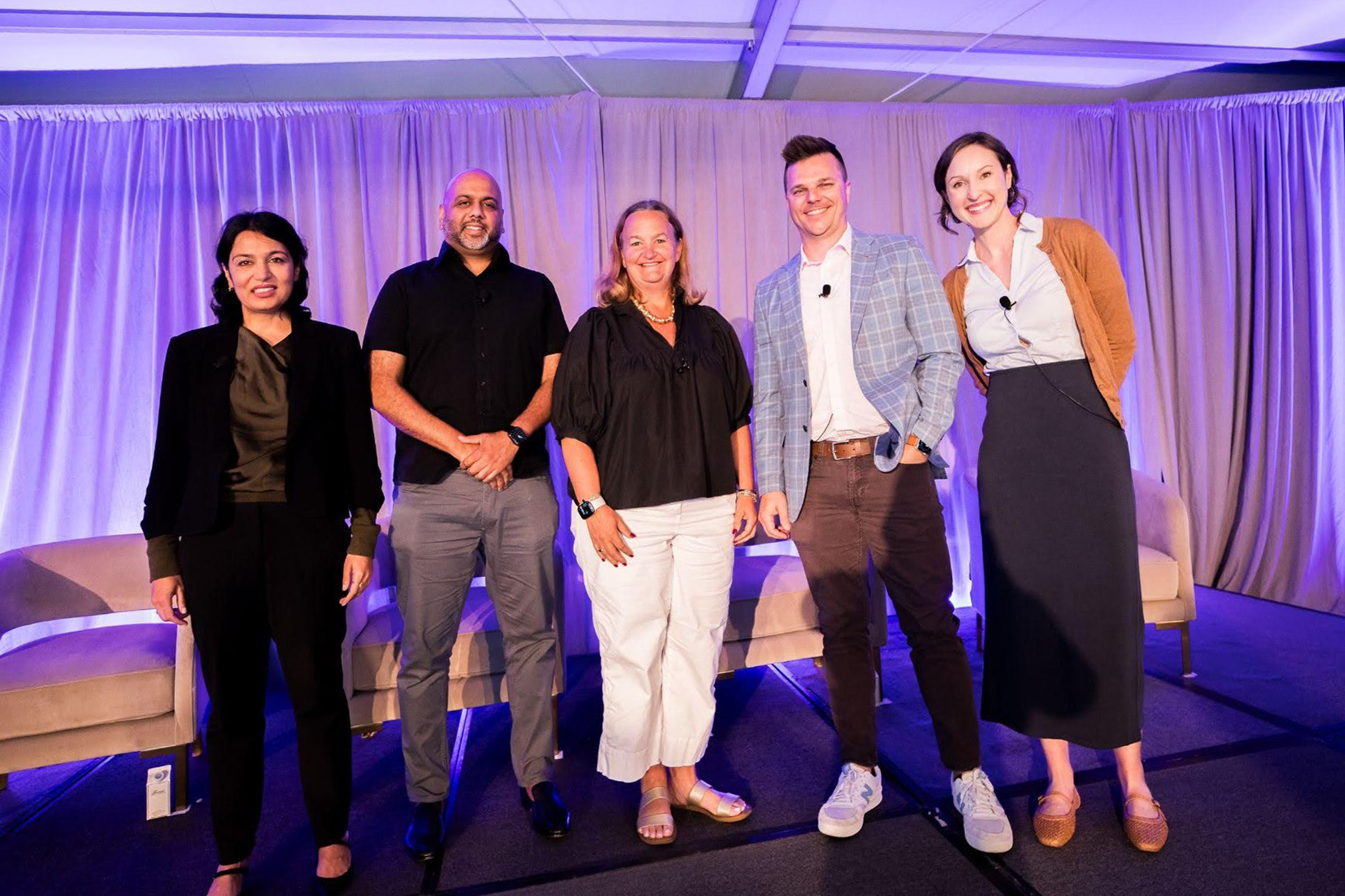
The proof came from the operators themselves. On the customer panel, Aamer Hayat of Northern California Retina Vitreous Associates described missing roughly a third of 10,000 monthly calls before deploying AI scheduling, even with 16 front-office specialists. After AI, the clinic was able to redirect about 250 hours a month from phone triage back to patient care.
Tommy Middleton of EmergeOrtho watched hold times fall from over an hour to under five minutes.
Dr. Pari Amin of MDCS Dermatology, in one of the most review-driven markets in the country, held a 4.8 out of 5 rating across more than 30,000 public reviews while handing patient calls to AI. What changed was not only the metrics. It was the confidence behind them. As Dr. Amin put it, two years in, there is not a single person on her team who would go back.
That shift matters because it changes how leaders evaluate technology. The question is no longer whether AI produces value. It is how fast that value can scale across workflows, specialties, locations, and acquired practices.
2. Buying shifted from point solutions to AI platforms
One word surfaced in nearly every roadmap conversation: consolidation. Healthcare leaders are worn down by managing dozens of disconnected tools, each with its own implementation, integration, dashboard, and vendor relationship. On top of wanting fewer systems, they also want fewer partners they can trust more deeply.
One executive summed up the mood in a single line.
I can't integrate 17 AI solutions.

Healthcare executive
Ascend 2026 roadmap discussion
The buying question is shifting from, “What product can automate this task?” to “Which company do we want sitting in the middle of every patient interaction for the next decade?”
That shift is why Patient Journey Memory resonates with so many healthcare leaders. It carries context from one patient interaction to the next, so scheduling, referrals, intake, outreach, and payments behave as one connected journey rather than five disconnected tools.
Healthcare is very good at storing information. What leaders want now is infrastructure that can remember.
3. The business case shifted from cost to growth
For years, the AI conversation in healthcare centered on cutting administrative costs. That still matters a lot, but at Ascend, executives kept returning to growth.
The questions sounded different than they did a year ago:
- How many more patients can we schedule?
- How quickly can we convert a referral before the patient goes elsewhere?
- How much provider capacity can we unlock?
- How do we reach patients after hours instead of waiting until the next morning?
Viewed that way, AI stops being an automation line item and becomes infrastructure for growth. Organizations aren't just looking for efficiency. They're looking for ways to help more patients get the care they need without placing additional burden on their teams. That’s a meaningful shift. One that moves AI from the back office to the strategic center of patient access.
4. The frontier is the entire workflow
The strongest product signal was that leaders are thinking less about isolated tasks and more about complete workflows. Referral management, prior authorization, intake, revenue cycle, payments, and care gap outreach all came up, and none of those is a single interaction. Each spans multiple teams, systems, documents, and patient touchpoints.
Historically, organizations bought a tool for each step. Increasingly, healthcare leaders want the steps connected: a referral that becomes outreach, outreach that becomes a booked appointment, a booking that triggers prior authorization, eligibility, reminders, intake, and payment.
The AI Innovation panel, moderated by our co-founder, Jeff Liu, made clear how much engineering that takes. Ameya Bhatawdekar of Braintrust argued that better models are needed, but more than that, it’s necessary that a team knows a system can be trusted to work reliably before it ever touches a patient. Evals are what close the gap between a promising demo and a system that a healthcare organization can actually use.
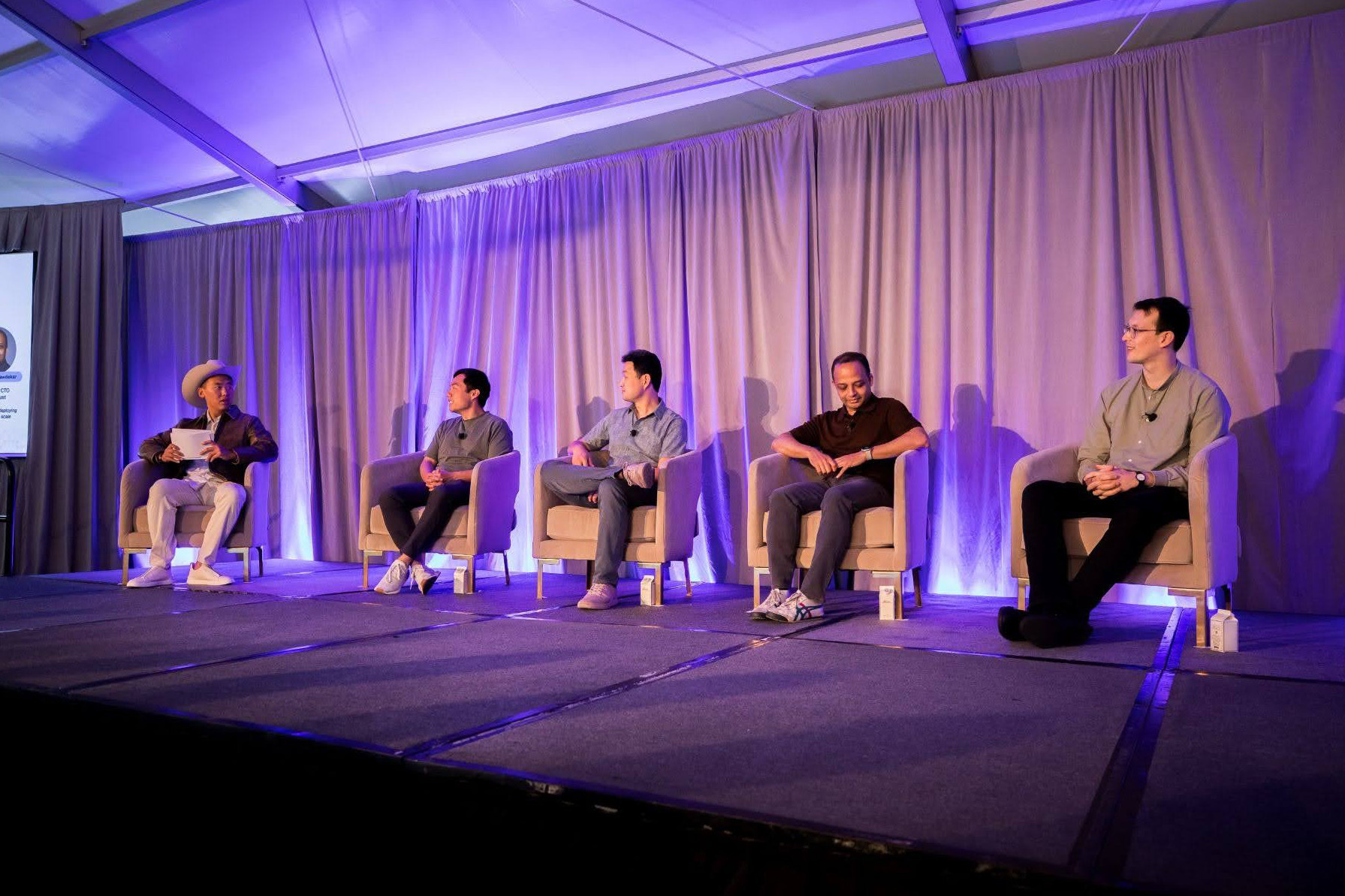
Second, patient communication is messier than most technology assumes. Alex Holt of ElevenLabs pointed to code-switching as an example, such as a patient who starts in English and flips to Spanish mid-sentence. Healthcare AI has to handle the way people actually speak, not just the way scripts are written.
Third, AI will have to operate across systems that were never built to talk to each other. Holt described agents standing in for APIs that payers and health systems never built, so an agent can pull an authorization code instead of a staff member reading it down the line.
David Zhao of LiveKit, whose infrastructure routes roughly a quarter of all 911 calls in the United States, spoke to what separates settings where real-time voice has earned trust from those where it has not.
The takeaway was simple: the next generation of healthcare AI will not be judged by whether it can complete a task. It will be judged by whether it can carry a workflow, and that will require AI operating with both IQ and EQ to successfully handle complex, nuanced patient interactions.
5. Trust, earned slowly, is the real competitive line
The most memorable session came from Paul Ricci, former Chairman and CEO of Nuance.
Nuance spent decades earning its place in healthcare, and the AI it built now runs inside a large majority of US hospitals. Looking back, Ricci was clear that adoption was never driven by hype or by chasing the newest trend. It was driven by accuracy that improved year over year, deep investment in customer success, and credibility earned over a long time.
Trust is a huge issue. It takes time to build. It's easily lost. So you have to be very protective of it.
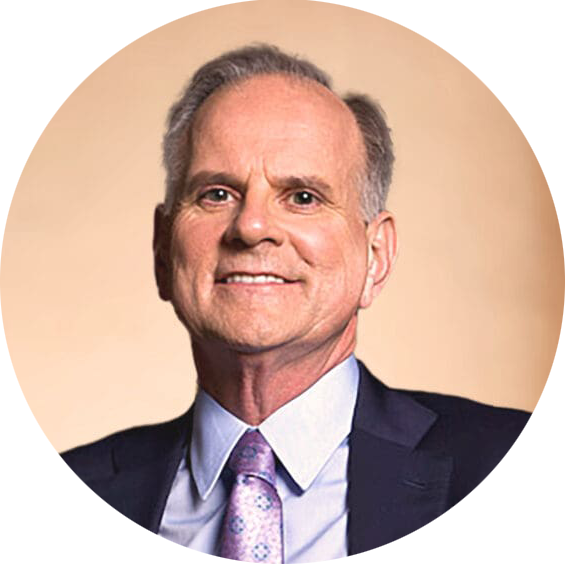
Paul Ricci
former Chairman and CEO, Nuance
That theme ran through the whole event, including the technical panel's honesty about where voice AI still falls short of human-level empathy and latency. Naming the gap, rather than overselling it, is itself part of how trust gets built.
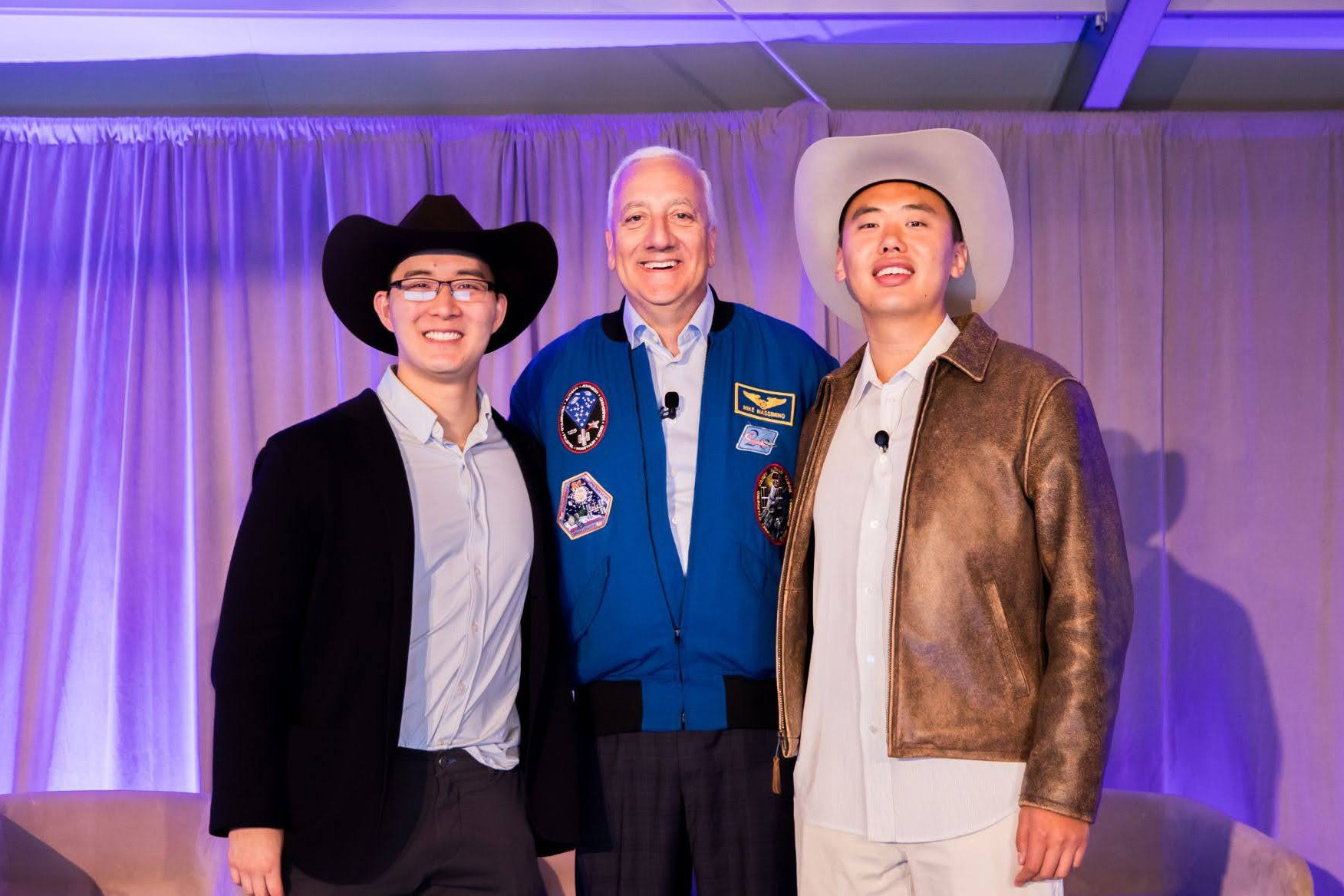
The keynote made the same point from a different world: astronaut Mike Massimino, who performed one of the most complex repairs ever attempted in space on the Hubble Space Telescope, described how performance under pressure comes from preparation and reliable systems built long before the pressure arrives. Healthcare requires the same thing. What will win in healthcare isn’t the best demo; it’s the system that an organization can depend on every single day.
Where this leaves us
Across nearly every session, the same idea kept resurfacing: Healthcare leaders don't want another tool, or another place where context gets lost. They want systems that can carry context across the patient journey instead of forcing patients and staff to start over at every step.
That shift has implications beyond individual products. Healthcare has spent decades getting better at collecting information. The next era will be defined by what healthcare systems can remember.
About Assort
During Ascend, we announced our $120 million Series C led by Menlo Ventures, bringing total funding to $222 million. More than $70 million will go directly into research and development over the next two years to expand Patient Journey Memory and the AI agents and copilots that support front-office teams throughout the patient journey.
We also opened nominations for the inaugural Frontier Awards, recognizing the operators, patient access leaders, and clinicians putting new ideas into practice and making care easier to reach.

Assort Health
AI Built for Specialty Care
Assort Health builds AI agents for the patient journey. Its team shares practical insights on patient access, scheduling, and healthcare automation.