

.svg)

Topics
See it in action
TL;DR
- On a live Becker's webinar, Assort's Chief Medical Officer Sunny Eappen, MD, and Matt Penrose, Director of Clinical Operations at TidalHealth Peninsula Orthopaedic Institute, took audience questions on what actually changes after an AI patient access deployment goes live.
- TidalHealth POI went from 90-minute peak hold times and 42% call abandonment to a wait measured in seconds and single-digit abandonment, across 43 providers and 6 locations, while cutting patient access staff from nine to five with no rise in attrition.
- Resolution rate climbed from 89.8% to 95.2% and quarterly bookings grew from 304 to nearly 2,900, evidence that the system got better with time instead of plateauing after launch.
- The panel's shared lesson: stop evaluating what the AI can do in a demo. Start evaluating what your organization has to do to make it work.
On August 18, Becker's hosted Dr. Eappen and Matt Penrose for an open Q&A on deploying voice AI in a specialty practice. Below is the recap, organized around the questions that actually came up.
Topics
TL;DR
- On a live Becker's webinar, Assort's Chief Medical Officer Sunny Eappen, MD, and Matt Penrose, Director of Clinical Operations at TidalHealth Peninsula Orthopaedic Institute, took audience questions on what actually changes after an AI patient access deployment goes live.
- TidalHealth POI went from 90-minute peak hold times and 42% call abandonment to a wait measured in seconds and single-digit abandonment, across 43 providers and 6 locations, while cutting patient access staff from nine to five with no rise in attrition.
- Resolution rate climbed from 89.8% to 95.2% and quarterly bookings grew from 304 to nearly 2,900, evidence that the system got better with time instead of plateauing after launch.
- The panel's shared lesson: stop evaluating what the AI can do in a demo. Start evaluating what your organization has to do to make it work.
On August 18, Becker's hosted Dr. Eappen and Matt Penrose for an open Q&A on deploying voice AI in a specialty practice. Below is the recap, organized around the questions that actually came up.
Why Was Patient Access Actually Broken?
Not for the reason most people assume. The practice had enough providers. It had enough staff, on paper. What it didn't have was a way to hold the scheduling logic for 43 providers and 6 orthopedic subspecialties in anyone's head, especially with high staff turnover erasing institutional memory as fast as it built up.
The result: peak hold times of 90 minutes, 42% of calls abandoned, and patients frustrated enough to drive to the office in person just to book an appointment.
We were unable to fill schedules, mainly due to extended wait times.
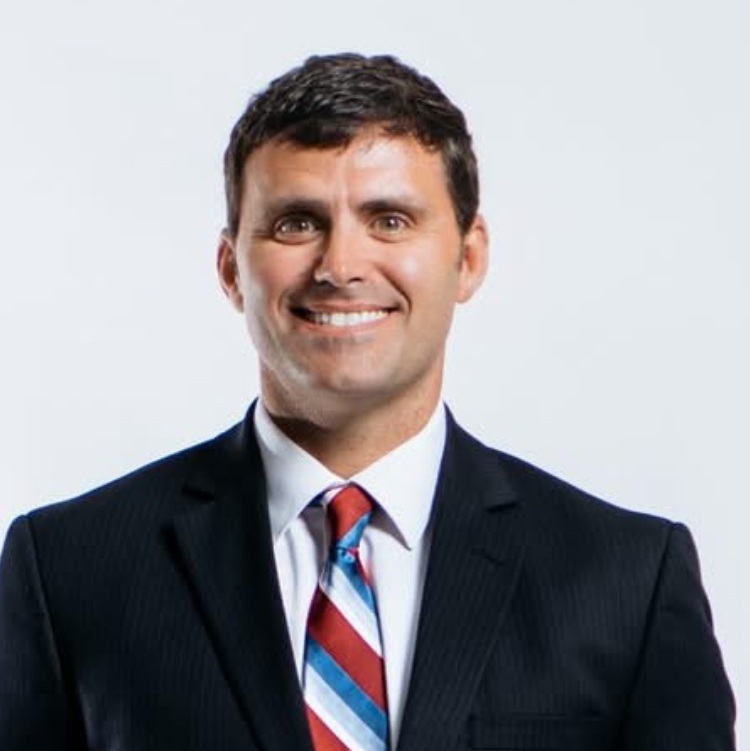
Matt Penrose
Director of Clinical Operations, TidalHealth Peninsula Orthopaedic Institute
How Long Did This Actually Take to Stand Up?
Three months, on paper. Matt and his team went live three weeks early.
The rollout started with one call. Then five. Then fifty, watched in real time as wait times and call handling shifted with each batch. The data moved fast enough that Matt pulled the launch date forward, a decision he described to his wife the night before as a coin flip between vindication and getting fired.
I'm either going to be a hero or I'm getting fired tomorrow, and I'm still here almost two years later.
Matt Penrose
Director of Clinical Operations, TidalHealth Peninsula Orthopaedic Institute
What Metric Actually Proves This Is Working?
Not containment. Containment tells you how many calls the AI handled without human help. It says nothing about whether the patient on that call actually got booked.
Abandonment rate is the number that matters, because it's the number that means a patient gave up, called a competing practice, or went without care entirely. Wait time and call volume matter for the same reason: they measure whether patients are getting through, not just whether the AI is busy.
What Actually Happened to the Numbers?
- Wait time: 90-minute peak down to seconds.
- Abandonment: 42% down to a 2% to 7% range.
- Call volume: cut nearly in half, once patients stopped calling back out of frustration.
- Staffing: nine patient access reps down to five, with attrition dropping instead of rising.
- Cancellations: cut in half, once the AI agent started offering to reschedule instead of just canceling.
- Patient satisfaction: 4.6 out of 5.
- Trajectory: resolution rate climbed from 89.8% to 95.2%, and bookings per quarter grew from 304 to nearly 2,900, two years in and still improving.
The metrics are pretty spectacular.

Sunny Eappen
MD, Chief Medical Officer, Assort Health
What Does Change Management Actually Look Like?
Getting the rollout right was not purely a technology problem. It meant managing three different groups through three different fears at once.
Frontline staff worried the AI agent was there to replace them, not help them, especially with attrition already high before launch. Matt talked to his team directly about what the change meant and framed it as support, not replacement, before go-live. That message held: attrition dropped after launch instead of rising, once staff felt the AI agent was easing their workload rather than threatening it.
Providers had their own adjustment period. Some pushed back early on when the system mispronounced a name or confused two providers with similar last names: one caller asked for "Dr. Vader," and a separate mixup involved two providers named Scott and a third named Skop. Matt and his team worked through it with Assort as the AI agent's name-recognition improved.
Patients got the most visible treatment: signage in every lobby weeks ahead of launch, and front desk and clinical staff briefed so nobody was caught off guard by a patient asking about it.
This is here to support you.
Matt Penrose
Director of Clinical Operations, TidalHealth Peninsula Orthopaedic Institute
Where Does the AI Agent Draw the Line and Hand Off to a Person?
Workers' comp, auto accident and PIP claims, and certain insurance categories route straight to a live agent. So does anything the system can't resolve after a few tries, any extended silence, and any patient who simply says "live agent." Same-day bookings get an extra check: nothing schedules within two hours of an appointment without a live review, and every after-hours booking gets verified by staff before the clinic day starts.
TidalHealth POI set these rules on top of Assort's baseline safety protocols. Another practice with different risk tolerance, payer mix, or staffing could draw the same lines somewhere else. What matters is that the org defines the line deliberately, not that everyone lands on the same answer.
If at any point a patient decides that they want to talk to a live agent, all they need to say is 'live agent.'
Matt Penrose
Director of Clinical Operations, TidalHealth Peninsula Orthopaedic Institute
How Did Patients Actually Learn to Trust It?
Every call opens with a disclosure: this is a virtual assistant. Patients who'd rather not talk to it can ask for a text link and fill out the same form on their phone instead. And yet, on both sides of that disclosure, patients still forget they're talking to AI by the end of the call, which both panelists pointed to as the real sign the experience had gone from novel to normal.
Part of that trust comes from memory. The agent remembers a patient's language preference or hearing needs after a single call, so returning patients skip the reintroduction most automated systems force on them every time.
That builds a lot of trust compared to every time you call, you've got to go through that rigmarole each time of getting the language right.
Sunny Eappen
MD, Chief Medical Officer, Assort Health
Staff trust followed a similar curve. The practice reviewed every single call during the first phase of rollout. Today it's a daily sample of ten, and two years in, neither panelist could point to a hallucinated or fabricated response as a real incident.
It's accurate. Quite honestly, the agent schedules more accurately than our live agents.
Matt Penrose
Director of Clinical Operations, TidalHealth Peninsula Orthopaedic Institute
What Surprised Them After Go-Live?
Forty percent of TidalHealth POI's call volume turned out to be patients calling just to confirm an appointment they already had, a load nobody had measured directly until the AI agent absorbed it entirely.
After-hours access mattered more than expected too. Once the team trusted the system enough to open it up 24/7, patients started booking overnight and on weekends. During a snow closure, patients who were stuck at home anyway called in and rescheduled themselves, no office, no staff, no problem.
When the Front Door to Patient Access Was Fixed, Then What Happened?
Referral intake. The practice receives roughly 350 faxes a day, about 30% of them referrals, and more than 40 staff touch that queue as time allows, a meaningful share of them still requiring a person to read, sort, and route into Epic's work queue by hand. Matt named it directly as the next place he wants automation to go, alongside pulling referral work queues out of Epic and scheduling directly against existing rules, the same fax and referral automation gap other specialty practices run into once inbound calls stop being the bottleneck. Fixing inbound calls didn't fix the access journey. It just moved the bottleneck one step downstream, into documents and the EHR instead of phone lines.
Fax queue remains to be a challenge for us.
Matt Penrose
Director of Clinical Operations, TidalHealth Peninsula Orthopaedic Institute
Dr. Eappen pointed to a third frontier beyond referrals and prior auth: outbound population health outreach, closing care gaps like overdue cancer screenings and A1C checks before a patient has to be the one to remember.
Particularly in population health related areas where you need to close care gaps, whether that's colon cancer screening, mammography, hemoglobin A1C checks.
Sunny Eappen
MD, Chief Medical Officer, Assort Health
The Takeaway
Every question that mattered came after go-live, not before it. The technology evaluation is the easy part. What's harder, and what actually determines whether a deployment works two years in, is what the organization does with it.
Do not evaluate only what the AI can do. Evaluate what the organization must do to make it successful.
Sunny Eappen
MD, Chief Medical Officer, Assort Health
For the full picture of Matt and his team's deployment, read the TidalHealth Peninsula Orthopaedic Associates customer story, and see how the same approach applies across orthopedic practices.
Bring your three messiest scheduling workflows. We'll show you how they'd run on day one.

Erin McInrue Savage
Head of Brand and Content
Erin McInrue Savage is the Head of Content at Assort Health, where she oversees brand, AEO, and editorial strategy.