Assort + Nextech announce strategic partnership →


Every healthcare organization is under pressure to improve patient access, reduce administrative burden, and do more with limited staff. AI has quickly become part of that conversation, but knowing where to start, and how to avoid costly missteps, is less straightforward.
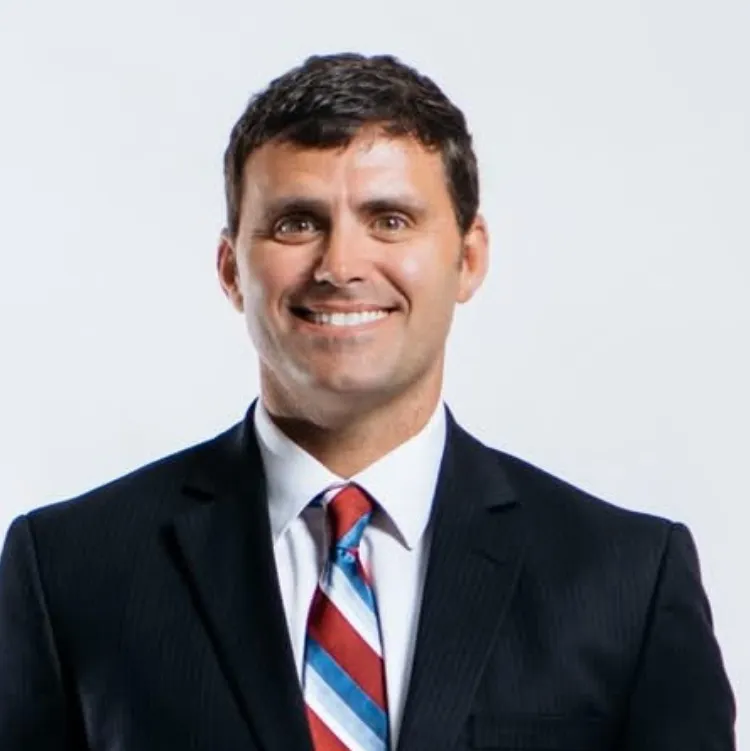
Join Dr. Sunny Eappen, Chief Medical Officer at Assort Health and Matt Penrose, Director of Clinical Operations at TidalHealth Orthopaedic, for a candid discussion on what healthcare organizations learn after deploying AI in patient access.
Before joining Assort, Dr. Eappen served as President and CEO of the University of Vermont Health Network and previously as Chief Medical Officer at Brigham and Women’s Hospital and Mass General Brigham. Together with Matt Penrose, he'll pair decades of health system leadership with firsthand implementation experience, sharing insights from what actually happens when AI meets patient access.
Scott King (Becker's Healthcare): Hello everyone, and thank you for joining today's webinar, "What Healthcare Leaders Wish They'd Known Before Deploying AI in Patient Access." We'll begin with a presentation and leave time at the end of the hour for Q&A. You can submit questions at any time using the Q&A box on your screen. Today's session is being recorded and will be available afterward using the same link you used to join. If you have any audio or visual issues, try refreshing your browser.
I'm pleased to introduce today's speakers: Dr. Sunny Eappen, Chief Medical Officer at Assort Health, and Matt Penrose, Director of Clinical Operations at TidalHealth Peninsula Orthopaedic Institute. Thank you both for being here. Dr. Eappen, I'll turn it over to you.
Dr. Sunny Eappen: Thanks, Scott, and thanks to Becker's and everyone participating. We're excited to talk about a very practical issue I've seen at every healthcare institution I've been part of: how do we remove the obstacles to getting patients to the right provider at the right time? Matt, maybe we can start with the problem you encountered, and then talk about how we worked toward a solution.
Matt Penrose: Thanks, Dr. Sunny, and thank you all for joining. Our patient access had significant challenges. We were unable to fill schedules, mainly because of extended wait times, up to an hour and 45 minutes. We had a large abandonment rate: 40 to 45% of our calls were being dropped. Patients were frustrated. They'd hang up and call back in, and some were so frustrated they would literally drive to the clinic to make an appointment. On top of that, we had high attrition and a lot of staff turnover. There were obvious challenges across our patient access at that time.
Dr. Sunny Eappen: It's shocking when you say that out loud, or imagine yourself on that kind of hold. I've had that experience trying to change a flight or book my own appointments. I've seen two perspectives. In a competitive environment where you have the opportunity to bring in more patients and you're not doing it, that's frustrating because you're losing business and patients aren't getting the care they need. On the other side, access can be challenging because you don't have enough providers or staff, and people end up doing work outside their caregiving role to fill the gap. Which side were you on?
Matt Penrose: We had enough providers, so it wasn't the provider piece. It was frustrating to hear patient concerns because we have great providers who offer great care. And although we had high attrition, we were adequately staffed for the number of calls. I think our processes weren't where they needed to be. We kept trying to hire more staff, and we knew we needed some sort of assistance beyond what we were doing.
Dr. Sunny Eappen: It's almost humanly impossible today for the people answering the phones to manage all the complexity coming in, especially with multiple locations and providers who each have their own requirements before a patient gets booked, or different appointment times. Tell us more about how your office was set up at that time.
Matt Penrose: Like most orthopedic offices, we have subspecialties, and each provider has specific nuances and decision trees they want followed, whether that's the chief complaint they see or age restrictions. It's exceptionally challenging for staff to remember all of those decision trees. One thing I'll touch on later is that when we went live with Assort, scheduling became more accurate, because you program the algorithm and it doesn't get it wrong once everything is set up the way you want.
Dr. Sunny Eappen: Did you have a few people with an enormous amount of history, or was turnover so high that no one really knew all the practitioners and locations?
Matt Penrose: We had a few long-standing staff members, but our attrition was significant, so there wasn't a lot of history. We had written cheat sheets, and our EHR at the time had some steps to assist, but it wasn't enough, and staff would stray a bit. You'd get a hand patient booked with a foot and ankle surgeon, and providers would get frustrated. At that time we had 40 to 45 providers across six clinic locations, and we've grown since then. We also have a dedicated call center that's on site but doesn't interact with the providers every day. With locations in two states, Maryland and Delaware, some staff don't know certain providers at all, so they don't have the relationship to understand each provider's nuances.
Dr. Sunny Eappen: What was harder than you expected when you moved from that manual process to agentic voice, for your staff or for the office as a whole?
Matt Penrose: Overall, the transition was way better than anybody anticipated, quite honestly. There were challenges. Some providers were frustrated when a patient would say, "They didn't even know you were a provider here." One thing we discovered early on is that patients pronounce a provider's name in different ways. If we have a Dr. Troger, patients might say it several different ways, and "Dr. Vader" even got thrown out there. We didn't have the AI programmed to recognize those variations at the time. We've since corrected that, and it's not an issue anymore. We also have two providers whose first name is Scott and one whose last name is Scott, and early on it couldn't tell them apart. That created some frustration for patients, providers, and staff, who were getting the complaints, but we've worked through all of it.
Dr. Sunny Eappen: You were very early in this process. Today we program similar names in and practice them beforehand, because a practice can even have two providers with the identical last name, and you have to differentiate them the same way you differentiate patients by asking for a birth date or a spelling. That's a great example of the evolution of the product, and of the steps you need to take before you start and keep refining as you go.
Dr. Sunny Eappen: I can see the need, with patients waiting so long. But when you were making the decision to use the technology, what concerns did you and your providers have?
Matt Penrose: We're going back over a year and a half; in October it'll be two years. At that time AI was just getting started, and a lot of people didn't trust it. We didn't know what the capabilities were. We're also in a fairly rural area, and while we have tech-savvy people, the general population has concerns about AI. We worried about the AI not picking up provider nuances, about patient concerns, and about staff losing their jobs. We worked through all of those. We did our homework: could the technology do the job? None of us really knew at that point. What would integration look like with our EHR and our other systems?
In the end, we got rid of several other applications because Assort replaced them, so that was a cost savings. On staffing, I had the conversation with the team that this was here to support them, and that turned out to be true. Our attrition rate dropped significantly after we implemented it. Staff truly felt supported by the technology. Their call volumes went down, they were handling more complicated calls, and overall we were in a much better place.
Dr. Sunny Eappen: The questions do change once it's in place. Remind us, what EHR are you on?
Matt Penrose: We're currently on Epic. At the time we were on athenahealth, and we switched to Epic about a year and a half ago. We didn't have any major complications with Assort connecting to either EHR. To my knowledge, we were the first group with Assort to go live on Epic. We worked through the APIs, and everything worked pretty seamlessly. We took all the existing provider scheduling decision trees we had, whether on paper or elsewhere, put them into Epic, and Assort copied those over really well.
Dr. Sunny Eappen: Did you have to change any workflows, or were you able to keep what people were doing while the system adapted?
Matt Penrose: We just kept enhancing the workflows. One nice thing we never had before Assort was a warm handoff. If a patient calls in and talks with our Assort agent, and for whatever reason we've set, the call needs to go to a live agent, the live agent can quickly read the notes without the patient having to repeat everything. That's a time saver and a patient satisfier.
Dr. Sunny Eappen: It sounds like complex insurance issues went to your office staff, and the voice agent passed those on. Was anything else surprising? Anything in the hallucination space we worry about, or anything unexpected?
Matt Penrose: There were some unexpected positives. I thought we were strong on our metrics, but we discovered that over 40% of our calls were patients confirming appointments. Even though we send three text reminders to every patient, 40% of that population still called to verify they had their appointment. Assort took those simple calls off our plates, and our live agents could handle the more challenging ones. We set up our decision tree so that VA, workers' comp, certain insurances, managed care, and PIP auto kick over to a live agent. And if a patient wants a person at any point, all they have to say is "live agent."
Dr. Sunny Eappen: These metrics are pretty spectacular. You went from a 90-minute wait to literally seconds?
Matt Penrose: Most days we're around a 30-second wait time, and keep in mind there's no wait for Assort's agent. It picks up instantly and can take a thousand calls at once. That 30 seconds is the wait for our live agents. We went from nine patient access reps down to five, and they're more efficient than ever and happier because they have less call volume. We were getting 2,200 to 2,500 calls a day, and that was cut almost in half, because I hadn't realized how many patients were hanging up and calling back to try to get a better place in line. Our abandonment rate is averaging 6 to 7%, and some days it's 2 to 4%. People aren't frustrated and hanging up, and we're filling our provider schedules, which at the end of the day is what we want.
One more metric, since they're exciting: our cancellation rate was cut in half. As simple as it sounds, when patients call to cancel, the Assort agent now asks, "Instead of canceling, is there a time that better suits you that we can help you reschedule?" And patients say yes. Before, they'd tell a live agent they wanted to cancel, the appointment was canceled, and we moved on.
Dr. Sunny Eappen: Amazing. Any hallucinations, or anecdotal stories there?
Matt Penrose: No, nothing crazy like that. We did our due diligence and we still audit calls today, though not every single call like we did during implementation. No hallucinations.
Dr. Sunny Eappen: That's great to hear. When I talk with provider practices, hallucination is one of their fears, that we'll miss something important. Did trust in the system grow over time, and did that change anything?
Matt Penrose: Yes, it's trusted. Now we do a daily audit of just 10 calls. Trust built up over time: on day one of implementation we did a single call, and then we built it up from there. It's accurate, quite honestly. The AI agent schedules more accurately than our live agents.
Dr. Sunny Eappen: I noticed your after-hours calls went way up. Is there a story there?
Matt Penrose: We didn't have any after-hours scheduling process before, just on-call coverage for providers. Once we gained trust in the system, which didn't take long, we decided to open it up 24/7. People work all different hours and want to schedule at different times. We also had a few bad-weather days this past year in Maryland when we had to close the office, and patients were able to call in and reschedule while we were closed. It's nice to have that availability so patients can schedule in a way that fits their lifestyle.
Dr. Sunny Eappen: That's one of the biggest obstacles, especially for small offices that close over lunch, which is exactly when patients have time to call. After hours really makes a difference. Did you use the outbound feature, for example if a provider was ill and you had to cancel patients?
Matt Penrose: We haven't implemented that yet. We can run a text message campaign through MyChart in Epic. I see the benefit, because it would keep our live agents from making those reschedule calls. We just haven't taken that step yet.
Dr. Sunny Eappen: Have you learned anything else since implementing the system? Sometimes when you remove one bottleneck, another one pops up.
Matt Penrose: Not so much on the patient access side. There are other things I want us to implement, like the fax queue work Assort is developing now, but we haven't found other patient access bottlenecks. This might be the kiss of death, but we're in a really good spot. Our staff are happy and our patients are happy. There's always room for improvement, and we keep making tweaks. For example, we keep refining how we ask questions so patients answer in a way that gets them off the phone a little faster. We've brought Assort agent call times down by about two and a half minutes from where we started. And because we can listen to every call, if there's a customer concern, we listen and ask how we can make it better. If one person has an issue, other people probably do too.
Dr. Sunny Eappen: Were you able to move some of the exceptions your staff handled over to the Assort agent, or did you set the system up front and it's worked well?
Matt Penrose: Our staff now have time for tasks they weren't getting to before, like some of the Epic work queues we were always behind on. We were even able to move tasks that didn't really fit our medical information team's job description over to patient access, because patient access had more availability. From a general workflow standpoint, that's helped quite a bit.
Dr. Sunny Eappen: And for your providers, other than getting patients in the door without hearing complaints about how hard it was to schedule, did anything change in their workflows?
Matt Penrose: They just kept rolling. We had those initial concerns about names, and some surgeons want their name pronounced correctly. But as long as they have a full schedule and patients have access, and it's better than before, which it is, they're happy. We put all the decision tree criteria they already had into Assort, and as I said, it schedules more accurately than our live agents.
Dr. Sunny Eappen: I've heard that once the AI agent is working well on inbound calls, the next roadblock people notice is referrals. How do you receive referrals today, and is there a role for an agent there?
Matt Penrose: We have a mix of referral intake. One of the Epic work queues I mentioned is incoming referrals to be scheduled, and we now have time to work that better than before. We also get referrals by fax and through a separate doctors' line. The opportunity is for Assort to pull that work out of Epic, call the patient without a live person, fit them into the existing schedules through the decision tree, and book them. I know work is being done on that now. We're not live with it yet, but that's our goal.
I believe Assort has also gone live with pulling referrals out of the fax queue and calling patients on athenahealth, though not on Epic yet. Our fax queue remains a challenge. We get about 350 faxes a day, and if we skip two days, we're pushing a thousand. There's a great opportunity there. Nobody wants to sit and go through faxes all day, but with 350 a day, that's what we have to do.
Dr. Sunny Eappen: The technology is moving so fast. I'll connect you offline with the right people, but the ability to read and process faxes is here now. 350 faxes a day is a huge volume.
Dr. Sunny Eappen: Looking at the last 12 to 18 months with this in place, how has your staffing changed, on both the provider side and the call center side?
Matt Penrose: We were Peninsula Orthopaedic Associates until July of this year, when we entered into an agreement with our local health system, TidalHealth. As a result, we took on two more clinic locations and 11 more providers. We're only about a month and a half into that growth, and we haven't changed anything so far. Last year we added three surgeons on the POA side and kept going like nothing happened. We have three more starting next month and two more committed for next year. I looked at the numbers to see whether we need more patient access staff, and at this point I don't think we do, especially if we get the fax referrals under control the way I hope. We went from nine reps down to five, and attrition isn't happening. Staff aren't working overtime and aren't frustrated, so we're in a good place even as we take on more volume.
Dr. Sunny Eappen: To summarize: you've grown significantly by adding providers, but the number of access staff has dropped and stayed constant, and turnover has been nearly nonexistent. That's a great story, and a credit to your team and the technology.
Dr. Sunny Eappen: Looking back, is there anything you'd do differently, or anything others can learn from, since many systems are hesitant to jump into AI?
Matt Penrose: I'm not sure there's anything I'd have done differently. We talked about the concerns, and we were in a bad place. I went home one day and told my wife, "I'm going to go live with the AI earlier than expected." She asked what that meant, and I said, "It means I'm either going to be a hero, or I'm getting fired tomorrow." I'm still here almost two years later.
Dr. Sunny Eappen: Sounds like you're a hero. Was there anxiety across the team, or were you an optimistic group overall?
Matt Penrose: Not everybody is as bold as I may be about jumping in, but we did our due diligence. We had metrics in place, aside from the surprise about confirmation calls. We knew what our challenges were, knew we had to do something different, and saw an opportunity to do something nobody else was doing. If the implementation phase had been failing, we wouldn't have pulled the trigger. If you decide to do this, work with a team like Assort that will help you figure out exactly what you need and fit the algorithm to your needs, not someone else's. And as challenges come up, work with that team to find another way to solve them.
Dr. Sunny Eappen: Did the cost estimates pan out? Did you spend more or less than expected?
Matt Penrose: Less overall, because of the value, whether that's tangible value like staffing and canceled appointments, or customer satisfaction. It was well worth the cost. We have great surgeons and great staff, and I'm proud of our team. We kept hearing negative complaints that got worse and worse, and in a rural community like ours, those concerns travel quickly. We had to stop it, and we were able to.
Dr. Sunny Eappen: Did you need technology expertise on your end, or was that handled by the vendor? How much of a pull was implementation and maintenance on your people?
Matt Penrose: It was a group effort. One reason we could take the chance on AI early is that our CEO is very tech-savvy and knowledgeable. Our IT team had some involvement, and we had clinical application specialists assisting, but Assort was guiding the way. Like anything successful, it's a team effort, not one person dictating how things go.
Dr. Sunny Eappen: Before we open it up for questions, this is the "what we wish we had known" part. Matt, anything you want to add?
Matt Penrose: I said it before, but the risk is not doing anything. If you have a problem, get your metrics in order and verify that the problem is real, not a particular staff member causing it. Your metrics will prove that. Work through it, talk to your staff about it, and then reach out to Assort or someone else to find out whether they're the right partner, and whether they can adapt and grow as you do. If that's the case, you'll have a good partnership.
Dr. Sunny Eappen: That's great. In previous roles, I lived in this space where AI was out there as a solution, but we weren't sure what our internal problem was. When we evaluated vendors, my fear was how much work we'd need to do to streamline processes across providers and offices. What's become apparent is that with the technology moving as it is, we don't have to create uniform practices, even within a subdivision, because these products are bespoke enough to handle the unique situations across locations. In the past, with EMRs, we felt we had to unify before we could do these smart things or let patients schedule on their own. We don't need to do that anymore. AI has catapulted us over that. Scott, I'll hand it back to you for questions.
Scott King: Thank you both for a wonderful discussion. Our first question: how long did it take from design to implementation?
Matt Penrose: We were scheduled for three months, but I pulled the trigger a bit earlier. We got the decision trees and providers in place, then did one call one day and scrutinized it. It wasn't a perfect call by any stretch, and keep in mind this was 18 to 20 months ago. The next day we did five calls. The plan was to keep growing, and once we reached 50 calls we were supposed to go up to 200. By the time we got to 50, we had fine-tuned things so much that it was already significantly better. We were watching in real time, and when we turned it on, you could see our call volume, wait times, and other metrics change live. That's when I went home and told my wife I might be fired the next day. We ended up going live about three weeks early because it was already showing benefits.
One small hiccup: I had our call center metrics screen up all day for the first three months, and our patient access supervisor and I were monitoring everything. At one point our wait times and call volume suddenly shot up. I contacted Assort, they said they'd found a hiccup, and five minutes later it was resolved. That's how directly you can see the AI agent's impact on your live team. It's phenomenal.
Dr. Sunny Eappen: It really is like flipping a switch. There have now been more than 250 implementations across 25 specialty groups, and the implementation team's experience keeps growing. We have best practices for rolling out by specialty, and there's always some customization that can slow things down a bit. Complexity also depends on how many providers and locations you bring on at once. But your story is very much in the norm today.
Scott King: What metrics indicate an AI deployment is genuinely improving access, rather than just reducing labor or increasing containment?
Matt Penrose: We focus on abandonment rate: how many patients hang up in frustration and call the provider in the next county or down the block. The other main metrics are wait times and the number of calls our agents are taking.
Dr. Sunny Eappen: At the end of the day, it's about how many patients get booked, and how many the agent takes from the start of the call all the way through scheduling. Those metrics are visible, and they show the load being taken off call center staff. One of the most striking things Matt shared is that 40% of calls were just confirmations. Eliminating that is a huge load.
Scott King: How are you measuring patient satisfaction? Is it qualitative, or an NPS score?
Matt Penrose: During implementation, we sent out our own patient surveys, and the results still hold today. They were basic: was it a positive experience with the AI or not? We were around 4.5 out of 5 positive, and we already knew we were getting negative feedback before the AI agent. Assort also has a really nice dashboard that tracks metrics like new versus established patients, urgent care, volume by provider, and chief complaint by body part.
Dr. Sunny Eappen: At its most basic, Assort asks patients at the end of the call to rate it from one to five and add any comments. It's optional. If a provider wants more detail, they can get it. Matt's team took the extra step of an independent survey, so it was unbiased, which is great.
Scott King: What cues the AI to hand off a call to staff?
Matt Penrose: We set our own criteria, and any practice can set whatever it wants. For us, it's workers' comp, auto accidents, and certain insurance types, which kick over when we reach the insurance question. If the patient at any time asks for an agent, a live agent, or a person, it kicks over. If the AI has to ask a question more than three times because the patient doesn't answer or there's a misunderstanding, it transfers. It also transfers after a period of silence; I believe we have that set at 20 seconds.
Dr. Sunny Eappen: Those criteria are very adaptable to the practice. The safety piece is also important. If a patient brings up something that signals urgency or an emergency, it gets handled. There's a best-practice package, and each practice can add its own triggers for talking to a live agent. The same applies after hours: if something urgent is going on beyond booking, canceling, or rescheduling, it gets transferred. The agents are programmed to be hypersensitive about not missing anything safety-related, and that happens quickly.
Scott King: What needed to be in place from a leadership and change management perspective to ensure successful execution across both people and technology?
Matt Penrose: Staying in touch with staff and having direct conversations about what the change is, what we think it will look like, and then continuing those conversations as the changes happen. Showing them the metrics helped too: hold times are gone, and patients aren't frustrated after being on hold for an hour and a half. The calls themselves were less frustrating, which I think was a big reason we didn't see attrition. Staff weren't hearing as many negative comments. Beyond that, it's workflow: we solved this problem, so what's next?
Scott King: Is everyone happy with AI?
Matt Penrose: There are some patients who won't like AI no matter what, and we have a process for that: they can go right to a live agent. We announce up front that it's a virtual assistant, so we're not trying to surprise anybody, no matter how real the conversation sounds. When you listen to calls, some people seem not to realize they're talking to an AI agent, even though we tell them, because they end with "Thank you, have a good day." Patients can also choose to receive a form by text and fill everything out on their phone instead. So there are options: a live agent, a form, or the AI.
Dr. Sunny Eappen: Matt, how did you prepare your patients before the switch?
Matt Penrose: We had signage everywhere: on the TV screens in all our lobbies saying it was coming in three months, and on the back of every door. Staff also had conversations with patients who asked about the signage. Not just patient access, but our MAs and front desk team all needed to know that this was coming and what we hoped it would mean. It wasn't just throwing it out there.
Scott King: How do you handle warm handoffs after hours? Do you have staff support? And if outbound calling is offered during business hours, how do you prioritize the queue?
Matt Penrose: We don't have anyone on after hours. The only change we made is that instead of everyone starting at 8:00, one person comes in at 7:30 to review every call made after hours and make sure it's accurate. We also set a rule that after-hours calls can't be scheduled within the first two hours of clinic hours. That gives staff time to verify that we take the insurance and that the patient is scheduled with the right provider for the chief complaint. Throughout the day, we also don't allow scheduling within two hours of an appointment time; those calls go to a live agent. That's been working well, and I haven't heard any concerns.
Dr. Sunny Eappen: Honestly, Matt, today we're almost beyond needing all of that because it's so accurate. It's partly trust and partly internal systems, but it keeps getting better. Prior authorization is a whole other issue, with so many variations even within a single insurance product, but that has gotten sophisticated enough to be checked and confirmed today. The technology is moving quickly.
Scott King: Dr. Eappen, how do you build trust with patients, and how do you handle accessibility, inclusivity, multilingual support, and bias?
Dr. Sunny Eappen: The technology has gotten so good in both voice and language. On the voice side, the linguistic specialization, including tone, volume, and understanding how different languages work, has improved a lot. So has latency: how long the agent waits before jumping in. There's an art to it, because you don't want to interrupt, but you also don't want dead air. It's not perfect, but it's much better and will keep improving.
The Assort agent can also remember a patient after one call. It remembers that you prefer Spanish, or that you're a little hard of hearing and asked it to speak louder, and it applies that the next time. That builds a lot of trust compared to going through the same routine on every call. As Matt said, patients increasingly forget they're speaking with an agent. They're just talking to someone who's helping them, a trusted member of the team, which is the goal.
Scott King: Our final question: what's the next application of AI you're looking at or evaluating?
Matt Penrose: Two things. First, the fax queue: sorting documents, putting them in the patient chart if they belong there, and if it's a referral, calling the patient and making the appointment. Second, the referral work queues in Epic, so we can schedule right out of them. Those are both hot on our plate.
Dr. Sunny Eappen: Those are hot areas: taking a referral that arrives electronically or by fax, pulling all the information, documenting it, and converting it into an appointment without a human in the loop. Second is prior authorization, where the rules can change rapidly. Third is outbound, particularly in population health, closing care gaps like colon cancer screening, mammography, and hemoglobin A1C checks. Those are live and real, and health systems are eager to move forward on them. Thank you all for participating and for the questions. If you'd like to talk with either of us or get more information, we've made ourselves available. Matt, thank you for being totally honest and sharing your experience.
Matt Penrose: Thank you, Sunny, and thank you, Scott, and everyone who attended.
Scott King: That's all the time we have today. Thank you, Dr. Eappen and Matt, for an excellent presentation, and thank you to Assort Health for sponsoring today's webinar. Have a wonderful rest of your day.
Explore how Assort can create more capacity for your team and better access for patients.