Assort Health named to KLAS' 2026 Emerging Solutions Top 20. Learn more →


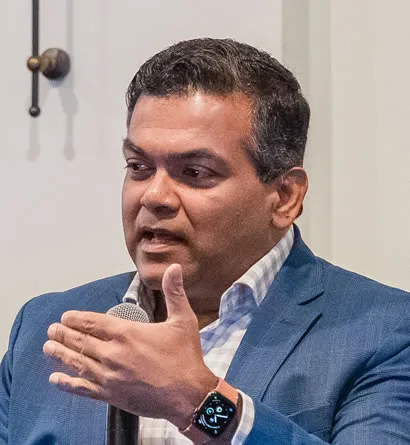
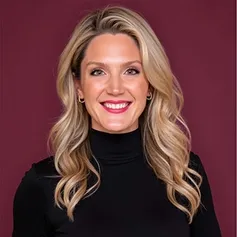
Patient access doesn’t end when a call is answered. In this MGMA webinar, Kristina Kemp of Assort Health joins Dr. Titus Abraham and Yvette Stevens of Annapolis Internal Medicine to discuss how the practice approached inbound requests, proactive outreach, staff preparation, and patient access measurement.The speakers share lessons from Annapolis Internal Medicine’s experience, including reported changes in hold times and staff capacity.
The practice reported that hold times fell 75%, from about four minutes to under one minute, and a 220% increase in labor capacity with existing FTEs as staffing moved from nine to six while maintaining volume.
Chris:
Hello, my name is Chris, senior editor here at MGMA. Welcome to today’s webinar, “From Reactive to Proactive: Rethinking Patient Access with AI.” Thank you for joining us.
We’d like to thank Assort Health for sponsoring today’s webinar. Visit assorthealth.com to learn how they help healthcare organizations automate patient access, from answering every call to working referrals end to end.
Please see the slide for available credits for the live and on-demand experiences. To claim all credit types, you must complete the session evaluation following this webinar.
We highly encourage interactivity in our digital events. Please use the chat button to talk to your fellow attendees and the Q&A button to submit questions for the presenters. Additional resources can be found in our learning management system. You can also access those during the webinar by clicking the Resources button in this Zoom room.
The education for this session will now begin. In today’s webinar, Assort Health’s Christina Kemp will be joined by Dr. Titus Abraham and Evette Stevens from Annapolis Internal Medicine. Together, they will examine how Annapolis Internal Medicine incorporated AI into its patient access strategy across inbound and outbound workflows.
Christina, Dr. Abraham, and Evette, I know you have a lot of great information to share, so I’ll turn it over to you.
Christina:
Thank you so much, Chris. I’m Christina Kemp, VP of Agent Strategy at Assort Health. I work with practices on patient access and the workflows behind it. I’m very happy to be joined by Dr. Titus Abraham, managing partner at Annapolis Internal Medicine, and Evette Stevens, practice administrator.
Let’s do a quick introduction. Dr. Abraham, could you briefly introduce yourself and your practice?
Dr. Abraham:
Good afternoon. My name is Titus Abraham. I’ve been practicing internal medicine for over 25 years. I’ve been at Annapolis Internal Medicine for about 18 years and managing partner for six years.
We’re an independent primary care practice at a single site in Annapolis, and we’re excited to share our experiences.
Christina:
Thank you, Dr. Abraham. Evette, could you introduce yourself as well?
Evette:
Hi, everyone. My name is Evette Stevens. I’m the practice administrator, so I have my hands in a little bit of everything. I’ve been with Annapolis Internal Medicine since 2004.
We want to remain an independent practice and utilize all kinds of tools to ensure that happens.
Christina:
Thank you both for being here. I’m excited for the conversation.
Before we get into it, I think it would be helpful to set the stage with a simple way to think about patient access.
It’s important to acknowledge that patient access goes beyond answering the call. The request must reach the right workflow your practice has created. As patients, we all know it can take many attempts to get to the right place. There are lots of challenges to solve and many opportunities for patients to get lost or drop off during that journey.
Our job is to fix those challenges and breaking points. The practice doesn’t just need to know that the patient’s call was answered. It needs to know that the patient completed the next step, or the final step after that.
That shift takes us from reacting to calls to facilitating follow-through. That’s how we win at patient access.
I’d love to look more deeply at what made that hard, and what has improved the process at Annapolis Internal Medicine.
Dr. Abraham, could you describe a typical day in your practice before you decided to make changes to your patient access workflows?
Dr. Abraham:
We’ve always struggled with wait times on the phones. It’s been a longstanding issue for as long as I remember working here.
On Monday mornings, when a crisis occurs, or when someone calls out sick—anything that affects that front line—you hear complaints, and the stress level in the office goes up dramatically.
Having enough staff to handle all those calls at peak times puts stress on the system, and that translates into poor patient satisfaction. Our scenario isn’t unique.
We’ve tried all sorts of things. We tried outsourcing outside the United States, but that created new problems and challenges. Those people have to engage with our software and electronic medical record and handle scheduling. When we hire new staff, we have to retrain them.
It’s a hard job to staff continuously because it requires significant training, continuity, and engagement. We’ve had to grapple with that constantly.
Christina:
I’ve heard about the woes of Monday mornings in call centers many times. It can’t be an easy problem to solve.
Evette, could you add where you saw those staffing pressures hit hardest for AIM?
Evette:
A big problem with small businesses is that there isn’t a long line of replacement people who can jump in when somebody calls out or when we’re covering vacations.
While we’ve had front desk employees who have been here for many years, that position also tends to have the highest turnover. Front desk staffing may not be someone’s long-term career goal, so we see a lot of turnover.
You’re constantly retraining people and making sure everyone is cross-trained the same way so patients experience continuity in every interaction. That doesn’t always happen. Humans don’t always retain all the information you give them during training, so the patient experience can vary depending on whom they speak to. That can create problems and complaints.
What we wanted in a solution was a way to make that first point of contact consistent, whether the patient is new or established. We wanted them to have the experience they would expect every time they called. That doesn’t always happen with people.
Christina:
We experience that across the board, not just in healthcare but in any team. I often hear that call centers and phone-answering roles have high turnover.
Evette, what was the hardest thing for your team to keep up with as that turnover happened?
Evette:
Definitely the phones. We’re a very busy practice. I believe we have somewhere around 17,000 active patients and 21 providers.
Phone volume varies widely at different times of day and on different days of the week. Staffing for that and feeling confident that patients aren’t waiting too long for someone to pick up is difficult. Every day, you never know what you’re going to get.
Christina:
Thank you for outlining that. The staffing picture gives us the backdrop of what was happening behind the scenes.
I’d love to talk about how that looked through the patient’s lens. Dr. Abraham, I’ve heard you say on many occasions that AIM takes pride in being a proactive practice and reaching out before problems arise.
What does that look like, specifically within your population health work?
Dr. Abraham:
We’ve shifted to allowing Assort’s outbound system to handle things like our flu campaign. We’ve done that for the past couple of years, and it’s helped us scale those interactions.
It allows us to reach the patients who need to be vaccinated, or at least scheduled for vaccination.
We’ve always had some sort of population-based approach, whether through texting or another method. The problem is that those approaches can create more steps and barriers for patients. You want to reduce the number of steps required for them to engage with the practice meaningfully.
With an outbound system, patients can schedule the visit within the call. Previously, the only real way to achieve that was to have a live person call, which isn’t always convenient. You have to staff at various hours, including five or six in the evening. There are a lot of moving parts.
With a vaccination campaign, we can achieve all that through technology and make it a very bespoke campaign.
I think that’s the future. Vaccinations are a big part of it, but we have to reimagine the role of technology, especially the technology we have now. It’s more flexible and responsive.
We use the term “AI” loosely, but that technology allows us to structure outreach around segments of the population, disease states, or whatever we’re trying to focus on. That’s especially important in a primary care practice where we have a lot of chronic disease management.
We’re looking forward to expanding that approach using what we’ve learned from the vaccine campaigns. We’ve learned a lot, we can track the outcomes, and we’ve been quite happy with them.
Christina:
That’s great to hear. Evette, what was difficult about this outreach when it was done through manual calls? How did you work around busy inbound lines while trying to manage outbound outreach?
Evette:
It was very difficult because we wanted to reach all our active patients.
Our previous system sent an email, but patients still had to call to schedule an appointment. They could also use the scheduler in our EMR’s patient portal, but it isn’t the most user-friendly, so engagement wasn’t high.
It usually required a phone call. We had to staff extra people when a campaign went out because we knew we would get hundreds more calls. It was overwhelming and stressful for employees.
By moving to Assort, patients could schedule themselves from a text message. For a campaign like that, it doesn’t require a phone call. They can click a link and schedule themselves for the flu clinic that weekend.
That creates higher patient satisfaction and relief for staff, who don’t have to handle hundreds of additional calls for a simple visit like a flu vaccine.
Christina:
Do you recall the feedback when you initially launched the campaign? Were patients talking about it in the office, or did it feel like the status quo without creating big waves?
Evette:
It did create some waves. The feedback was, “That was so much easier. I don’t want to call your office if I don’t have to. I don’t want to wait 20 minutes for somebody to pick up the phone.”
We hear those comments from patients. The easier you make it for them, the more satisfied they are.
Christina:
It sounds like you had specific proactive goals that encouraged you to launch those outbound campaigns.
Let’s look more closely at what it looked like when you started.
I love that everyone gives their agent a different name. You named yours Amy, which I imagine wasn’t too hard to come up with.
As I understand it, you started deploying Amy into routine scheduling, triage, and FAQ workflows before moving into outbound campaigns.
Dr. Abraham, how did you decide which requests Amy could handle and which needed to go to a live agent?
Dr. Abraham:
We looked at the most frequent reasons people call. They’re mundane, but they’re the lifeblood of the practice: scheduling, rescheduling, and cancellations.
We also have a same-day acute care clinic where patients call with complaints. Those were the big areas we considered for an agent like Amy.
We wanted Amy to do the repetitive tasks that can be stressful for a person to do monotonously hundreds of times a day.
We have a robust electronic medical record. By marrying Amy’s functionality with the EMR, we can handle scheduling and rescheduling after hours. A fair number of people call after hours, when we’re not necessarily staffed. That allows us to offload and manage significant volume.
If something goes wrong, we can go back, analyze it, discuss it, and address it. Nothing is perfect.
What we’re seeing today reflects a lot of work from our staff and the Assort team: reviewing transcripts and looking at how patients respond to the agent and how the agent responds to them.
One thing I love is reading the transcripts. It may seem like a strange thing to do, but it’s almost surreal to see a conversation happening when you realize it’s software talking to a person. It looks like a real conversation.
I want to emphasize that teams on both sides have to be engaged. It isn’t plug-and-play. Every practice is different.
The broad themes are there: scheduling and rescheduling probably account for much of what patients call about in every practice. But ultimately, you have to get into the details and understand the process deeply.
Frankly, before this, I never understood at a deep level how our processes worked.
Another useful aspect was allowing patients to schedule for clinical reasons. I want to be clear: We’re not using the agent to make clinical diagnoses. It isn’t playing doctor or triage nurse.
But we identified certain things that could safely be done with guardrails when scheduling for our clinic, beyond a routine follow-up visit. Someone might have a cough or a set of symptoms that needs evaluation.
We already had a protocol for humans to use when they received those calls. We used that same protocol to program Amy to recognize symptoms that could be handled safely within the scheduling workflow. If there’s a red-flag symptom, the call transfers to a human to coordinate it.
That has worked fairly well and allowed our clinic to manage what needs to be addressed appropriately. Patients don’t necessarily have to wait 30 or 40 minutes on a Monday morning. They can call, and if we have an opening, we give it to them. That’s been a real win.
Evette:
One of the first things we did when we implemented Assort was turn on our phone line 24 hours a day.
Previously, our phone lines were open Monday through Friday, 8 to 5, and for a few hours on Saturday. We decided early to keep the line open 24 hours so patients could schedule by phone, leave nonurgent messages, and submit refill requests.
There was no reason to deny access for nonurgent issues just because the office was closed. That was a popular change that happened immediately.
Christina:
I assume part of what you gained was less backlog of voicemails and phone calls to deal with on Monday mornings.
Evette:
Yes. The way we route messages, they go to the person who needs to see them first. They don’t go into a general inbox that someone then has to work through.
If a patient leaves a message for their provider and it’s labeled clinical, it goes to the provider. It routes things more quickly and increases patient access, which is always popular with patients.
Christina:
Dr. Abraham, you mentioned reviewing transcripts and keeping the team engaged while dialing this in.
As you went through that process, did you find yourself changing exceptions or reasons to direct a patient to a live agent instead of having Amy handle it?
Evette:
We constantly provide feedback, yes.
Dr. Abraham:
We look at that and at the patient experience.
One thing we addressed was the flow and cadence of the conversation. We wanted a more human-like conversational cadence and to shorten the back-and-forth.
From the programming side, the aim is to be as safe as possible and build in enough buffer. From our side, we might say, “That could be done faster.”
It isn’t that the system can’t handle a longer conversation, but the patient can become frustrated by prolonged back-and-forth. We worked on that experience: Do I enjoy talking to the agent, or is it frustrating to go back and forth?
That involved a fair amount of discussion early on, and it has markedly improved over time.
Christina:
At what point did you decide it was time to explore outbound workflows after tackling inbound? Were there measures you tracked before making that decision?
Dr. Abraham:
We made that decision fairly early. In our minds, there wasn’t a lot of difference in usability or where we wanted to go, especially with high-volume calls.
The point was to decrease staff workload and reach people at an accessible time. Within three or four months, we were discussing it seriously.
Because of the nature of flu season, you have to plan early. It has to coordinate with scheduling and vaccine availability.
We also started outbound early for clinician cancellations—when clinicians were on vacation or out for another reason. We have pretty good control over that now.
In fact, I’m going on vacation, and I just saw that we’ve already created the outbound campaign internally to handle it. It’s a nice feature to have the practice manage some of that functionality.
Christina:
Could you explain that workflow in more detail?
Dr. Abraham:
I’ll let you take that.
Evette:
We have an ongoing outbound campaign that reaches patients who have no-showed or canceled without scheduling a follow-up.
For a provider vacation, we freeze the affected appointment slots. It takes about 30 seconds to set up a campaign for Amy to reach all the patients within that timeframe.
You can customize the message. You can say the provider is on vacation or will be out of the office, and it gives patients an opportunity to reschedule for the next available appointment.
It’s very simple compared with having a person call every patient and spending hours doing it manually.
I also want to point out that when we implemented Amy, we didn’t replace any of our people because of AI. Nobody lost their job.
However, when someone left that department, we didn’t need to replace them. I think that’s important to mention.
Amy takes on a lot of the work, and we can use our people for functions requiring human intervention. They’re doing higher-level tasks that need their engagement instead of repetitive, lower-level tasks that don’t require as much skill, training, or expertise.
Christina:
Thank you. I’d like to dig deeper into the people and processes around Amy.
I spend a lot of time thinking about how important change management is when making a change in any organization or team. You need to work with the people behind and in front of what’s happening.
Practices have different approaches to tackling this with their teams. In these situations, it’s almost double change management because it affects patients and staff. That makes it more complex.
Dr. Abraham, how did you think about bringing your team along and helping them understand the goal behind launching Amy?
Dr. Abraham:
For me, there were two audiences.
There were my colleagues: physicians, PAs, and nurse practitioners. For them, it was more of a “Wow, we have this new technology. Let’s see how it works” experience.
For staff who were more directly affected, I took a different approach. First, we explained why we were doing it to decrease anxiety and uncertainty.
Any change in an organization, good or bad, can create uncertainty: “What does this mean for me? What does it mean for my role?”
We were transparent very early, months before we had the first call handled. We said, “We’re going to do this, and this is why.”
That’s the first thing any organization needs to do: Be utterly transparent and give staff enough time to process the change. Then go from there.
Christina:
Evette, do you have another perspective on how you approached the change with your team?
Evette:
We had an all-hands meeting with the staff and gave them an opportunity to ask questions.
Being open, clear, and transparent about what we were trying to do relieved some anxiety. When people hear “AI” or “virtual agents,” there can be fear: “What’s going to happen to me?”
We made it clear from the beginning that this was a tool to help with their daily workload. It wasn’t taking away what they needed to do. It was another tool to offload burdens that didn’t require their input while improving patient satisfaction.
Phones have always been the pain point in this practice. I’ve been here 22 years, so I can speak from experience.
It has transformed our practice. It really has. The wait times, engagement, and adoption rate have been phenomenal.
We’re a little over a year in and far exceeding our expectations for how we would use Amy and how many people would use her.
It’s been about constant communication with our staff and patients about what they can do. I’m looking forward to rolling out the chatbot next.
Christina:
As are we.
It sounds like you approached this with your teams openly and transparently, which helped earn trust and get people on board.
How have you thought about continuing that education? As the team answers calls, they may get questions about how to interact with Amy or why patients are being asked to.
Are there training materials that help the team address those questions?
Evette:
We’ve encouraged employees to call as patients and interact with Amy so they understand the patient experience.
We’ve also provided lots of tips about what Amy is intended to do. We developed frequently asked questions and reference materials so staff understand what patients are talking about when they give feedback.
Dr. Abraham:
We’ve also encouraged staff and my colleagues to take an analytical approach when something doesn’t work as expected.
The temptation is to react emotionally and say, “It didn’t work.” That’s easy to do. But if you’re invested in a system and want to improve it, you have to ask why it didn’t work and figure it out.
Encourage curiosity. I want to go back to Assort and say, “This didn’t go the way we expected. What do we do about it? Is it a systemic issue or a one-off? How do we fix it?”
Curiosity is important as an attitude and an approach to problem-solving. A problem shouldn’t necessarily be a reason to get angry or frustrated. That happens with any technology; none is exempt. It should create curiosity: How can we get better?
Christina:
I like that approach. We can all react emotionally, but looking at it analytically and through curiosity is a positive way to approach it.
We’ve unpacked what change management looked like for staff inside the practice. Let’s talk more about the patient perspective, because a change like this requires patients to adjust too.
As I understand your story, patient comfort varied. Some were engaged and enthusiastic and gave positive feedback. Others were more hesitant or declined automated interactions, which is normal.
Clear instructions and expectations within calls helped patients interact and complete their tasks.
You’ve achieved a 4.3 out of 5 patient satisfaction rating, which is very high and above the average we see. Congratulations on that.
Evette, for patients who preferred a live person, did your team capture feedback that you incorporated into the system to encourage more participation?
Evette:
We definitely look at reasons for transfer. That’s probably one of the things we audit most.
We’ve found that scheduling and routing to the right provider are automated and working well. We want to know why people transfer and why they aren’t giving Amy an opportunity to help.
There will always be people who want to speak to a human no matter what. But we had Assort program a little friction into that process and let the patient make a choice.
Amy can typically handle a request within two or three minutes from start to finish, compared with waiting 20 minutes for a human operator.
She lets them know: “I can usually handle most tasks within this amount of time. Do you still want to be transferred?”
If they’re okay waiting, we’re okay with that route. We try to be transparent that using the system can complete the task faster than waiting for someone to pick up.
Christina:
Do you find that a particular demographic or part of your patient population is more likely to interact with Amy, or more likely to ask for a human?
Evette:
Our average patient age is 65-plus. We use athenahealth, and we can track engagement. More than 90% of our patients are on the patient portal.
I think we had an advantage because people were already engaged in electronic messaging and getting their labs online. That positioned us better for patients to engage with Amy.
I think that helped with the number of transfers, because our engagement with Amy is better than the benchmark.
We’ve always been a little technology-forward in this practice. We’ve looked for tools to help us be more efficient and get back to patients faster. We pride ourselves on that.
We look at the data and want to engage patients who aren’t giving the system a chance. We may be able to change some people’s minds or give them more information about using it.
Some people simply won’t use it, and we understand that too. But we try to educate our patients.
Christina:
Is there a particular team member whose role includes educating patients to interact with the technology?
Evette:
Yes. One of our patient representatives engages with patients the most. She knows a lot about Amy and knows how to answer those questions.
Dr. Abraham:
We’ve also been transparent with patients from the beginning that this is a virtual agent. Without that introduction, you might sometimes assume it’s a real person and voice.
We’ve been clear about that and tried to stay curious about complaints.
Patients have complained to me in the office, and I’ll say, “That’s great. Let me know. Can you tell me when you called?” I send that information to our staff member to investigate.
If someone has a complaint, I’m curious: Why didn’t it go the way they wanted? What could have been done differently?
Anecdotally, I’ve watched the transcripts over time. I’d have to look at the numbers, but the conversations now seem uniformly routine. Almost all are resolved the way the patient wants and the way I want.
I don’t hear the same level of concern. Patients are happy with the process. The suspicion, fear, and concern aren’t things I hear anymore.
Christina:
And it’s been about a year since you brought Amy in?
Dr. Abraham:
Yes.
Christina:
Zooming out to the results, you reported that hold times fell by about 75%, from about four minutes to under one minute. It sounds like there had also been times with 20-minute holds or longer, so that’s a great result.
You also reported about a 220% increase in capacity within your existing FTEs. That’s exciting.
We’ve touched on some of this, but what changed operationally when you started seeing those results? Evette, could you answer that?
Evette:
As I said, people may have left, but we didn’t have to replace them. Amy started paying for herself quickly.
We haven’t had turnover in that department in the past year, compared with what felt like constant turnover before. We used to rely on temp agencies to fill gaps when we were short-staffed or pull people from other departments. That isn’t happening anymore.
It makes it easier to know what to expect from your day. It used to be, “We had two people call out in the same department. What are we going to do? How will we cover messages? Who will do what?”
Now, if somebody goes on vacation, we’re covered. After hours, we’re covered. It’s relieved a lot of staffing anxiety in that area.
Dr. Abraham:
I wrote a whole blog about it. A collective sigh of relief. People can go on vacation.
Christina:
That’s great.
Evette:
Yes, without it being a traumatic event.
Dr. Abraham:
Job satisfaction improvements.
Christina:
That’s amazing. I also understand you’ve added providers—two last year and three this year.
How did this solution and what you achieved contribute to that growth?
Evette:
There will always be providers who leave and need to be replaced, but we’re now at 21 providers, the most we’ve ever had.
We could probably grow more, but we don’t have the space. We’re at maximum capacity.
We didn’t have to hire more phone staff or administrative staff to accommodate those changes. It’s nice to know you can change operations without affecting every department or creating anxiety about hiring more people to cover everything.
We know the phones are covered, and I look forward to expanding what Amy does for us day to day.
Christina:
Thinking about the patient access scorecard and returning to the beginning of our discussion, inbound requests aren’t just about answering the call. They’re about getting patients to the next or final step and making sure those things happen.
It sounds like Amy’s inbound and outbound workflows let you do that at scale.
When you think about the scorecard—operational outcomes, metrics, and patient outcomes—are there any blind spots in what you measure or report to understand how it’s working?
Evette:
I don’t think so. We record a lot of metrics, and someone reviews them weekly. We know what’s happening with our phones and how many calls are abandoned.
One change I didn’t mention earlier is that we used to offer a callback feature where patients could leave their number, or a voicemail option, because people couldn’t wait that long.
We ended up with hundreds of voicemails to call back. We removed those features because we don’t need them anymore. Patients can complete nonurgent requests on their first call.
We look at abandoned call rates weekly, and those numbers have improved. Hold time has definitely improved too.
Dr. Abraham:
Amy picks up on the first ring, so there’s no delay in reaching someone. It may not be a human, but a virtual agent answers on the first ring. That’s a different story from relying entirely on human operators.
Another value that may not be obvious is that, with our prior technology, I couldn’t get my hands around what was happening. The data was hard to find and scattered.
Now there’s a profound difference. With the technology, AI, software, and work going into it, we can understand what happened. We can say, “This is what happened.”
That’s a shift in how you think about managing the business or a call center. The technology and granular detail allow it.
If I want to measure something, I probably can now, whereas before I wouldn’t have known where to start. You can’t manage what you can’t measure, to some extent.
There’s the good feeling of walking in and thinking, “The phones should be fine today,” but now you can ask, “What are we looking at today? What happened here?”
If we’re talking about blind spots, there were a lot before.
Evette:
Absolutely. Having a transcript of every call makes a huge difference.
When patients complain, what they report may not necessarily match the actual situation. Transcripts and recorded calls make a huge difference when handling pushback or complaints. We didn’t have that before.
Christina:
It’s a powerful tool to rely on.
You’re about a year into this journey with Amy. What advice would you give other practices looking to start something like this?
Dr. Abraham:
Take the first step. Engage and be proactive about solutions.
If your call center is working great and everyone is happy, I understand that this may not be the solution you need. But I think that’s the exception rather than the rule.
Over time, costs and access to human labor become issues. Those are real problems that small businesses and businesses of other sizes face.
As healthcare demands grow, especially around chronic disease management, you need a configurable system you can work with and understand. You need to know what it’s delivering to your patient population and business.
Every leader should explore options. People on this call are obviously interested in doing that.
Take the first step, but be open and clear-eyed. There’s no magic or pixie dust. This requires work and engagement.
It’s like a long hike: You’re looking for the view at the end. We’re not at the end of our journey by any stretch, but we see what we’ve done so far, and we’re happy.
I know there are questions about ROI, but those are unique to your organization. We believe we have the ROI.
The hardest part is taking that first step and committing to improving the experience for your patients.
Christina:
Thank you, Dr. Abraham, and thank you, Evette, for the conversation. I’ve enjoyed walking through your journey over the last year.
I’ll hand it back to Chris for Q&A.
Chris:
We had a lot of good comments and questions throughout the session. You said the journey isn’t over, but many questions focus on what it has looked like and how Amy works.
Let’s get a few rapid-fire answers. Christina, you might be best positioned to answer these.
Can Amy handle several calls at once, and can she handle inbound and outbound calls at the same time?
Christina:
Absolutely.
Chris:
Can Amy speak more than one language? Can she handle bilingual calls?
Christina:
Yes, she can.
Chris:
Does this work with any EHR or practice management system?
Christina:
Yes. Amy integrates with athenahealth at AIM, but the platform can be integrated with other EHR systems as well.
Chris:
Another question that came up several times: How does Amy avoid double-booking a slot?
Christina:
I’ll answer at a high level, and Evette or Dr. Abraham can add to it.
We integrate with the EHR, so we can see the schedules and identify openings in scheduling templates versus slots already booked. That’s how we determine where an appointment can be placed.
Chris:
People were also concerned about keeping their existing phone number. How did that work with Amy?
Evette:
You can keep your phone number. We had to work with our phone system to make it happen, but it wasn’t difficult.
Outbound campaigns still display our phone number, and patients still call the same number.
Chris:
John asked: How does Amy know which patients should see another physician while their doctor is on vacation rather than simply rescheduling? Does the physician review the schedule and give Amy or clinical staff information to ensure those patients see another physician during the absence?
Evette:
We have a lot of programming and protocols for appointment types.
If someone calls for a follow-up and their provider is out, Amy offers appointments with our PAs or NPs. If it’s a same-day sick visit, she looks at our acute care providers’ schedules first.
There’s a lot of templating, but it’s very customizable, and we tweak it all the time.
Chris:
People also asked whether Amy can book flu shot appointments on the schedule and cancel existing ones. Could you expand on that?
Evette:
Yes to both.
Once we open the flu clinic schedule, we have appointment slots available. Our flu clinic operates on a first-come, first-served basis. Patients reserve their place to be seen that day.
We customize the campaign so the patient reserves a slot and it goes onto the schedule.
Chris:
There were also questions about ROI. One person asked whether the cost of after-hours answering services went down because Amy could handle some calls. Others wanted a sense of cost compared with your previous approach.
Evette:
We changed that a little. We were using our local hospital system’s answering service and switched to a different system.
Our cost remained about the same, but that was because we chose a more deluxe package for after-hours service.
The setup gives patients a path based on whether they’re calling about something urgent or nonurgent. Urgent calls go to the on-call provider. Refills, general messages for providers, and scheduling requests go through Amy.
Chris:
We’re getting close to the end of the hour. I’d like to give each of you a chance to share closing thoughts.
Dr. Abraham, anything else before we close?
Dr. Abraham:
A shout-out to the Assort team. They’ve assembled a good team, and that’s important.
We haven’t talked much about it, but if the team at whichever vendor you choose isn’t responsive, engaged, or committed, the process won’t succeed.
We found the opposite. The Assort team has been very committed and engaged. I could tell stories about things they did early on beyond what I would expect from an average company. The service was remarkable.
And a shout-out to our own team, Evette and her staff. You need a good in-house team too. Without two good partners, it’s going to be a long road.
Chris:
Evette, any closing thoughts?
Evette:
Take the step. Get your measures together, see where this type of system can help your group, and stay engaged if you go down that path.
It isn’t a process where you’re engaged for one or two weeks and then done. It takes a while, but it’s worth it.
We found that the Assort team was right for us and provided the level of engagement we needed for our patients and practice.
Chris:
Christina, you get the final word. Any last thoughts?
Christina:
I have to reciprocate that sentiment. The work doesn’t happen without a highly engaged team.
Many thanks to Evette and Dr. Abraham for being at the table through the trials, tribulations, and learning. Your work has made it possible for us to do so many great things with Amy. Thank you.
Chris:
I’ll echo that by thanking Dr. Abraham, Christina, and Evette for this timely and relevant presentation.
Thank you to everyone for joining and participating. The education for this session has now ended.
We’d like to thank Assort Health for sponsoring today’s webinar. Visit assorthealth.com to learn how they help healthcare organizations automate patient access, from answering every call to working referrals end to end.
If you have content questions, please direct them to hello@assorthealth.com. For webinar-related questions, contact service@mgma.com.
Please complete the evaluation, which will be available in our learning management system about five to ten minutes after we sign off. After earning your certificate of completion, which is required to claim credit, please allow 24 hours for system communications.
For information on our conferences and other webinars, please see the MGMA events page.
Thank you again, everyone. We hope to see you at another online event soon.
Explore how Assort can create more capacity for your team and better access for patients.