Assort’s Patient Journey Platform
Answer calls, book complex appointments, work referrals, automate intake, and resolve balances. Each agent applies your protocols and writes every outcome back to your EHR.
Because every agent works from the same patient context, more referrals become appointments, more requests get resolved without staff, and routine work stops falling back to your team.
Get a demo →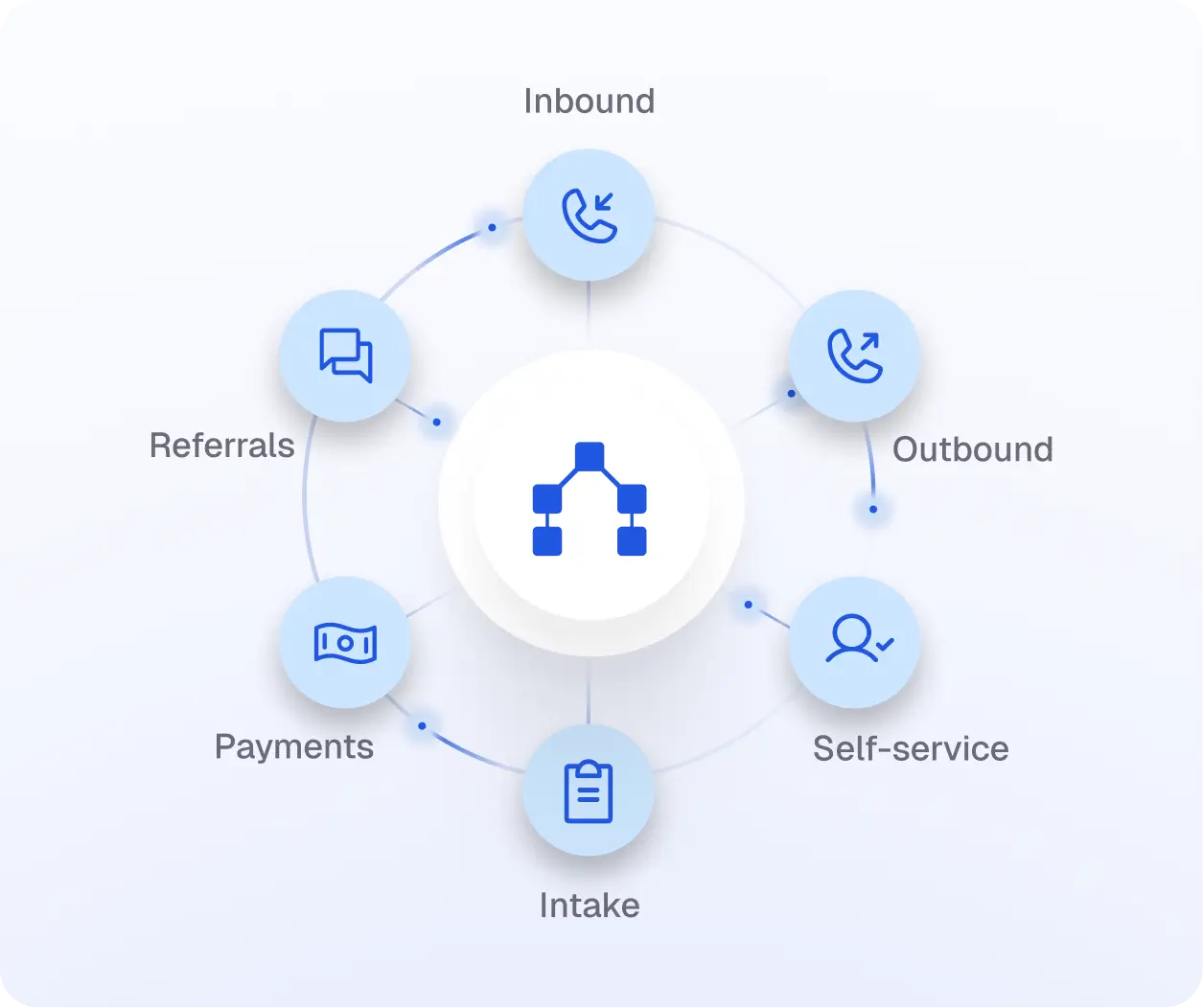


A patient calling about one thing often has something else open: a referral nobody has worked, an intake form half finished, a balance from a visit last month. Because every Assort agent reads the same patient context, it can surface those and act on them in the same conversation, so the patient gets further and your team has less to follow up on.

One shared foundation across the entire patient journey.
Assort books on chief complaint, laterality, payer contracts, and slot length across 200+ complaint types and 50+ anatomical regions. A left knee and a right shoulder go to different providers; a general agent books the first open slot.
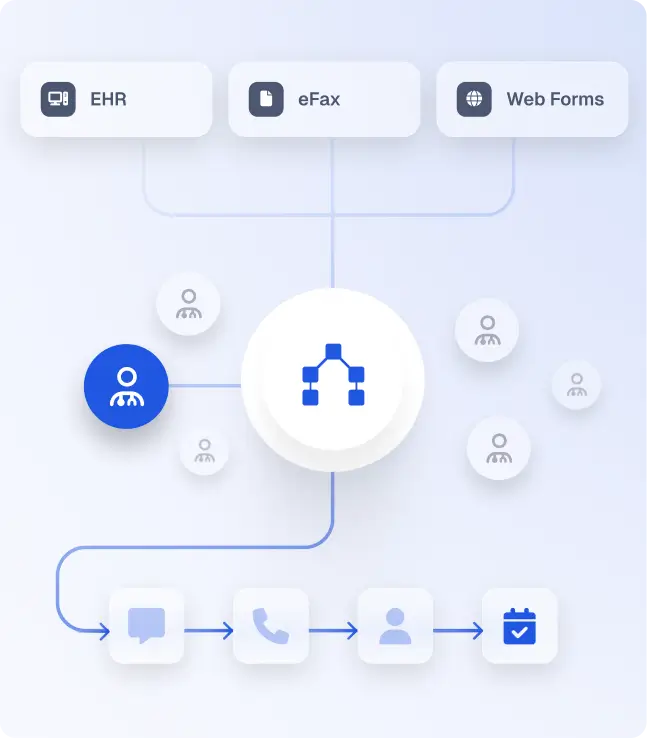
Your agent starts from hundreds of deployments and 300M+ patient interactions, covering 62,000 care protocols and 1.6 million decision pathways. Every new implementation adds to that library and to the test set every agent is checked against.
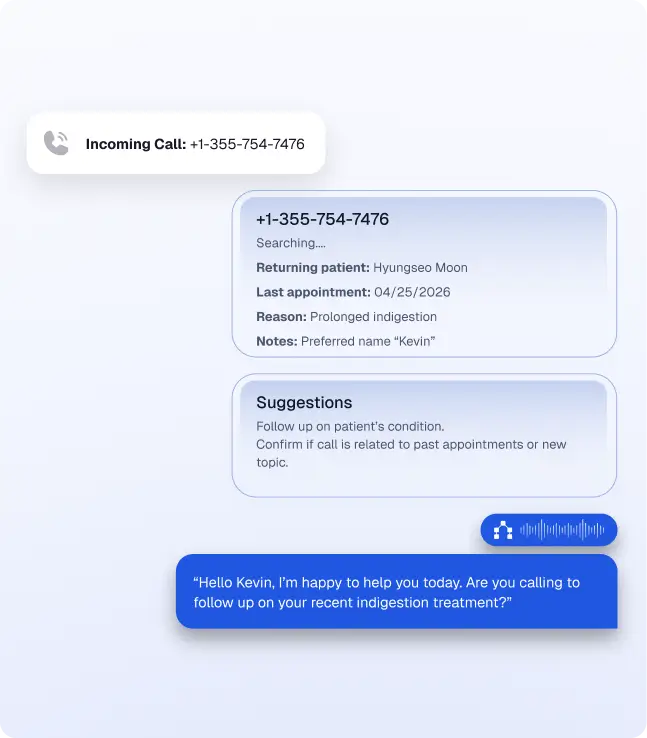
Every call is scored against your rules, and flagged sessions land in a dashboard you and your Agent Strategy Manager review weekly. Most vendors configure once and leave improvement to you.
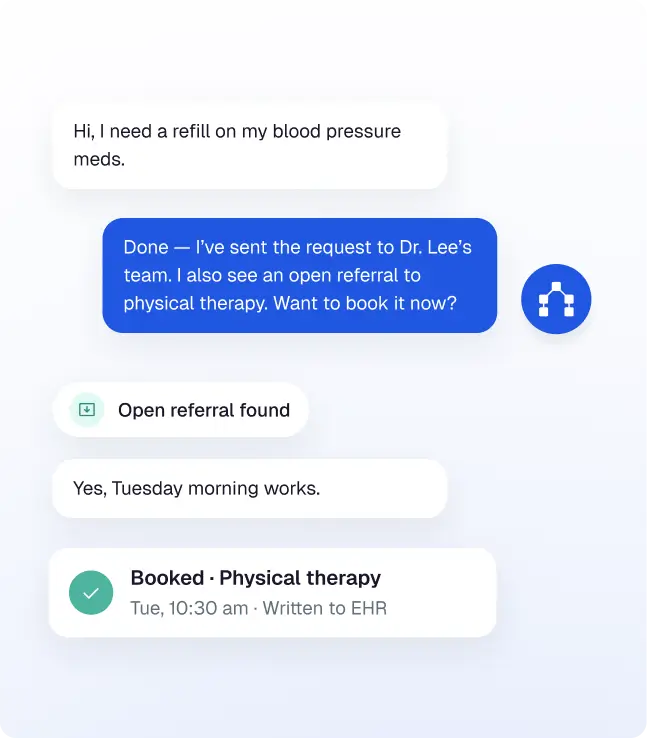
Every product runs on the same protocols, EHR integration, and patient context. An open referral gets booked on an inbound call; a booked visit stops outreach already in flight. The next product is a configuration, not another implementation.
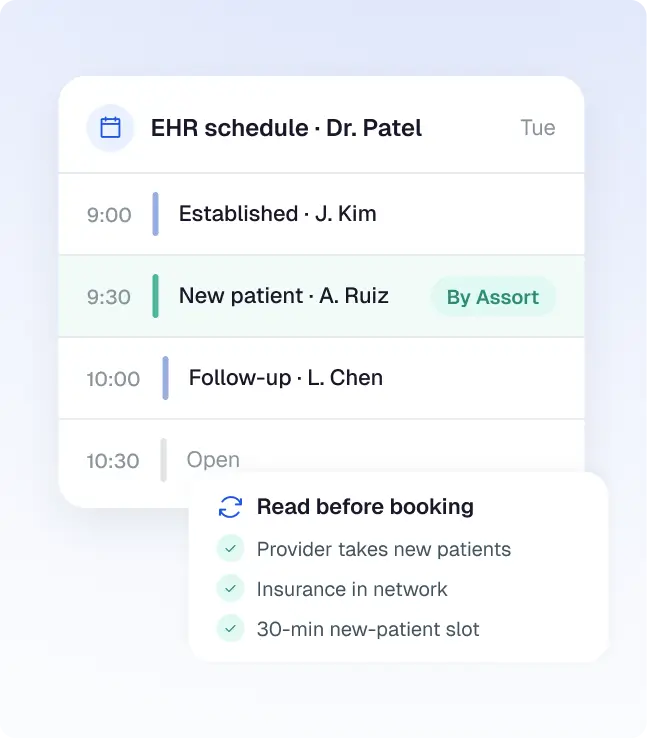
Agents apply your rules and write the appointment, outcome, and documented request back into your EHR. Practices resolve more calls end to end, because the work finishes rather than arriving in a queue.
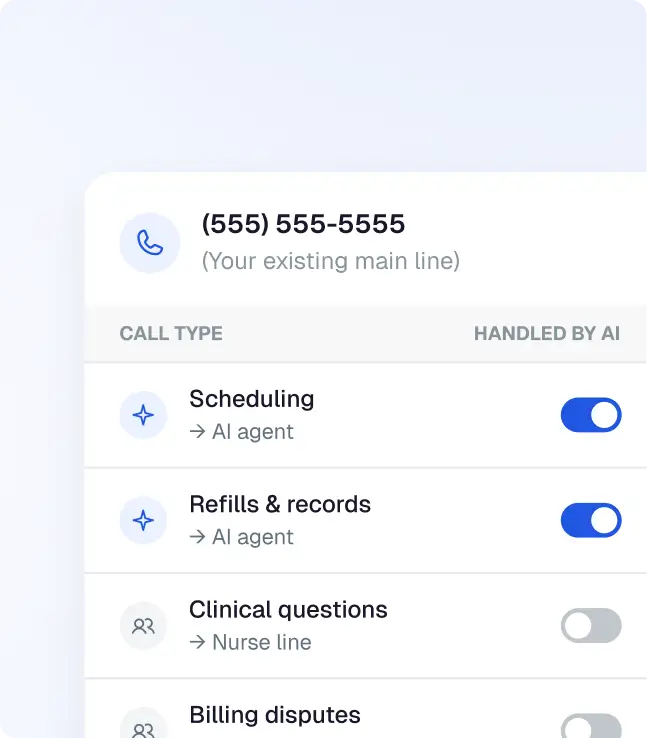
Engineering, implementation, clinical, and security are in house and US based, so multi-site rollouts run in parallel. Every visit type is validated in your own non-production EHR first.
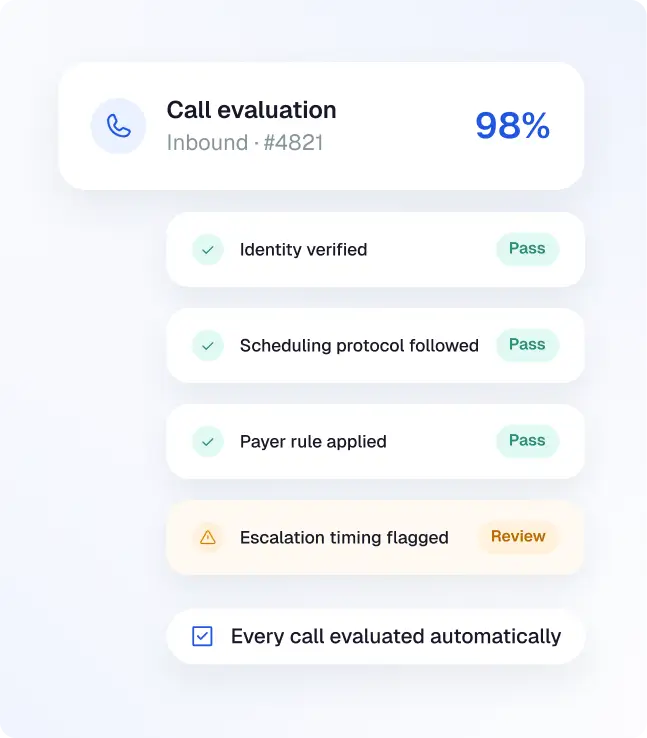

Voice AI that books on your protocols and improves with every call on the platform
Learn more →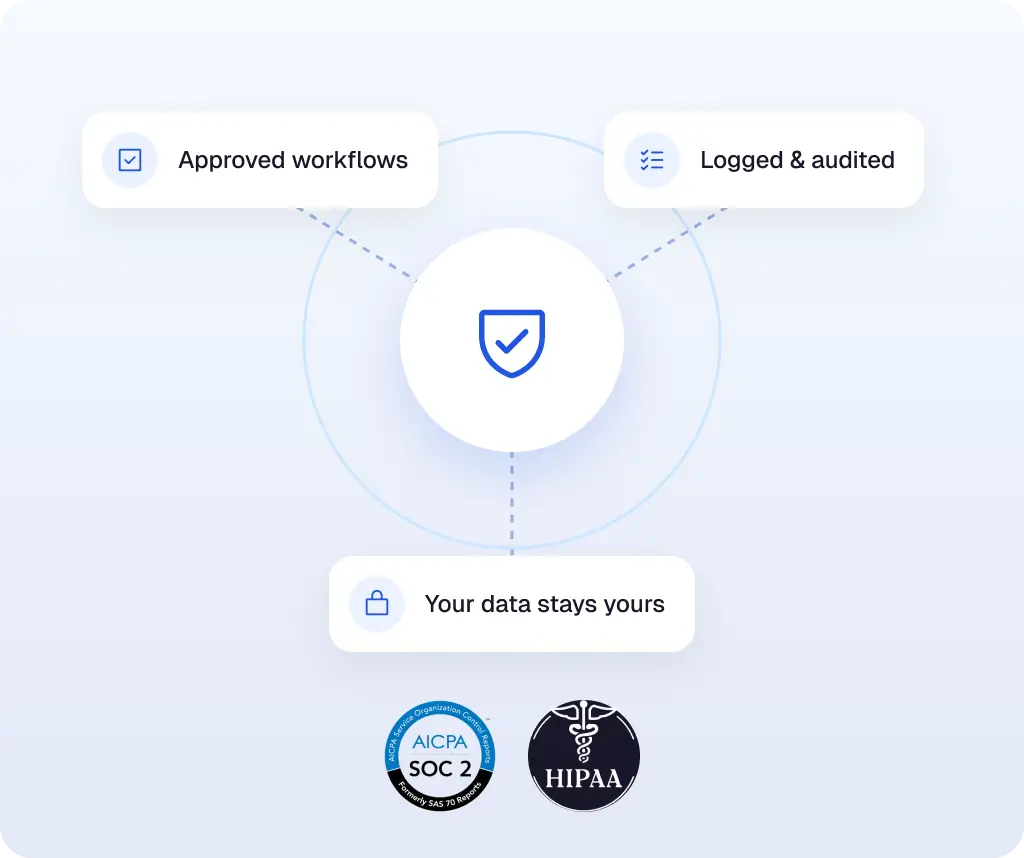
SOC 2 Type II, HIPAA, and a BAA on every engagement are the floor. None of them describe what an AI agent actually does inside a patient call, so Assort answers that separately: the agent can only take actions you’ve given it tools for, anything clinical routes to a person on rules you set, and your patient data never trains a foundation model.
Impact & Results

Annual revenue per 100 providers
Increase in appointment volume
Increase in labor capacity
Hold time reduction

“Assort has fundamentally changed how we approach patient access. We’re handling more calls and scheduling more appointments without adding headcount.”

John Haworth
Director of Contact Center, SENTA Partners
Follow one patient from their first call to a resolved balance, and see how Assort applies your specialty’s rules at every step.
An AI agent for patient access completes the work behind a patient request, not just the conversation. It answers the call, applies your scheduling rules, books in your EHR, and brings in your staff when judgment is required. Assort has agents for Voice, Self-service, Outbound, Referrals, Intake, and Payments.
Voice is just one interface, and a patient access agent has to do more than talk. Assort’s agents complete the request behind it: applying your scheduling rules, matching the patient to the right provider, and writing the appointment into your EHR. They do the same across web, text, email, forms, and referral documents from shared patient context, and they keep getting better after launch as completed interactions are reviewed and tested.
Assort works with the EHR and phone system you already use, with bidirectional integrations across more than 20 EHR and practice-management systems. Your EHR stays the system of record: agents read live availability and patient context, then write appointments, updates, and outcomes back to it.
No. Customer data is not used to train third-party foundation models, and Assort holds no-retention terms with the model providers it uses.