

.svg)

Topics
See it in action
TL;DR
- Six front-office workflows carry most of the labor drain in medical practices: scheduling, intake, referrals, outbound outreach, after-hours access, and triage.
- Automation holds only when it inherits the practice's real scheduling logic, payer rules, and sub-specialty routing. Generic tools often break at the first exception.
- Sequence the rollout by where labor capacity burns first, then expand into workflows that create the most downstream rework.
- Verify EHR write-back depth, protocol coverage, and warm handoff paths before contract signature; those decide whether automation compounds or stalls.
Topics
TL;DR
- Six front-office workflows carry most of the labor drain in medical practices: scheduling, intake, referrals, outbound outreach, after-hours access, and triage.
- Automation holds only when it inherits the practice's real scheduling logic, payer rules, and sub-specialty routing. Generic tools often break at the first exception.
- Sequence the rollout by where labor capacity burns first, then expand into workflows that create the most downstream rework.
- Verify EHR write-back depth, protocol coverage, and warm handoff paths before contract signature; those decide whether automation compounds or stalls.
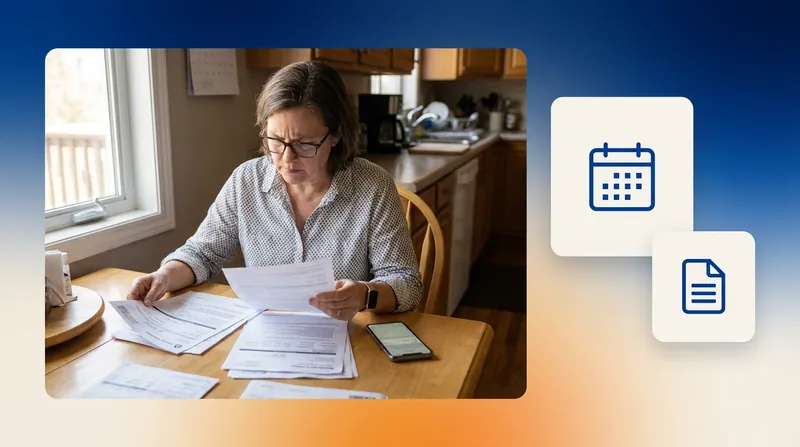
Adding staff has stopped absorbing call volume in most medical practices, and the question is no longer whether to automate but which workflow to automate first. Six front-office workflows carry most of the labor drain in a typical practice, and the order they automate in determines whether returns compound or stall.
The six that matter:
- Scheduling
- Intake
- Referrals
- Outbound outreach
- After-hours access
- Triage
Automation compounds across them only when it inherits what the front office actually runs: chief-complaint triage logic, payer-specific prerequisites, and provider preferences that shift by visit type and, in specialty groups, by sub-specialty. Tools built without that depth tend to break the first time a real patient access rule fires.
What Is Healthcare Workflow Automation, and Why Do Medical Practices Need It?
Healthcare workflow automation uses AI and rules-based systems to handle repetitive administrative work across scheduling, intake, referrals, outreach, and after-hours access. Done well, it reduces scheduling errors, protects referral volume, and returns staff attention to direct patient care.
The pressure behind adoption is financial. 90% of medical groups report operating costs rising an average of 11.1% year over year, 65% of practice leaders name labor as the single biggest cost increase, and AI has overtaken EHR usability as the top technology priority for Medical Group Management Association (MGMA) medical group leaders, jumping from 13% of practice leaders to 32% in two years.
Automation pays off where the manual load is heaviest and the leakage most expensive. Physicians and their staff complete about 39 prior authorization requests per physician each week, consuming 13 hours of physician and staff time. Referrals leak at scale, and barely half of them convert to a completed visit.
The people managing all of this are also the hardest to keep. Medical assistants and front-office staff are the most frequently cited turnover positions, and 56% of practices say MA hiring got harder in the past year. Each time someone leaves, the cycle restarts, because the next scheduler relearns every provider's scheduling logic from scratch.
The Six Workflows Where Automation Pays Back Fastest
The table breaks each workflow down by implementation complexity, likely operational impact, and the practice profile it fits best, so you can pick the first one to automate based on where the payoff lands soonest.
Start with the workflows that burn labor capacity first, then expand into the ones that create the most downstream rework.
How the Six Workflows Automate in Real Medical Practices
Patient Scheduling and Rescheduling
Scheduling errors waste capacity the practice does not have, and every misbooked slot lands on a physician's desk as a complaint. The logic varies by patient and payer, and provider preferences change the schedule too: in OB/GYN, certain appointment types get double-booked based on stage of pregnancy, with an office visit and mammogram scheduled back-to-back, and getting the sequencing wrong means the patient makes two trips.
Assort Health's platform books, reschedules, cancels, and confirms appointments around the clock, applies each provider's templates, and writes every appointment directly to the EHR. Web chat and self-service scheduling on the practice website run on the same scheduling logic, so a self-booked visit clears the same rules a phone booking does.
Michigan Orthopedic Surgeons deployed this across 35,000+ monthly calls and reports capturing $2.3 million in additional revenue, growing appointment volume 5%, and achieving 3.5x higher self-scheduling conversion than its previous tool.
"I'm so glad we made the switch to Assort Health. Since implementing the platform, we've seen a significant lift in patient conversions and appointment bookings. Just as importantly, our patients no longer wait on hold, calls are answered instantly, and our staff can focus on delivering a great experience rather than managing phone queues."
Director of Business Development, Michigan Orthopedic Surgeons
Patient Intake and Eligibility Verification
Manual intake means staff toggling between the phone and the EHR while transcription errors cascade through the record. The Council for Affordable Quality Healthcare (CAQH) estimates over $15 billion in annual savings from automating eligibility/benefit verification and claim status inquiries.
The platform collects pre- and post-visit forms digitally, handles copay collection, and writes responses straight into the EHR. On the phone, it captures demographics and insurance and verifies eligibility in real time. Both paths run HIPAA-compliant interactions and patient-first identity verification.
Chesapeake Health Care runs the platform across OB/GYN, adult medicine, and pediatrics, where the agent creates patient cases for refills, referrals, test results, and nurse messages directly in the EHR. Labor capacity grew 50%, and hold times fell 89% to roughly 45 seconds.
Referral Processing
Referrals become revenue only when they turn into scheduled visits, and barely half do. In one study of 247,187 outpatient referrals, 54.1% were completed, so nearly half of referred patients never reached a scheduled visit. Faxed PDFs sit in queues, and open referrals sit unscheduled in the EHR.
The platform parses fax and PDF referrals into structured patient records without manual data entry, identifies patients with open referrals already in the system, and triggers outbound scheduling by phone and text.
In a high-volume practice, a faxed referral gets parsed into a structured record, matched to the right provider or sub-specialist, and queued for outbound scheduling before a staffer ever opens the fax inbox. That shortens the window in which a referred patient gives up and calls another practice.
SENTA Partners reports generating $1.3 million in additional appointment revenue this way, freeing 300+ staff hours per month, and converting 64% of automated referral outreach into booked appointments.
Waitlist Backfill and Outbound Outreach
Cancellations leave same-week holes that staff struggle to backfill while answering inbound calls, and inactive patients stay untouched for the same reason. Patients respond around the clock: 39.5% of 170,000 waitlist responses in a Mayo Clinic study arrived outside weekday hours of 7 a.m. to 7 p.m., engagement a phone-only front desk cannot capture.
Outbound campaigns notify waitlisted patients when earlier slots open, run reminders, confirmations, no-show rescheduling, and cancellation rescheduling, and re-engage inactive panels and care gap lists, including Healthcare Effectiveness Data and Information Set (HEDIS) and risk adjustment factor (RAF)-driven outreach. A canceled slot gets offered automatically to waitlisted patients according to configured access protocols, filling a high-value block that would otherwise sit empty because no one had time to work the phones.
Annapolis Internal Medicine reports booking 61% of its flu shot appointments through automated outreach, increasing labor capacity by 220% with existing FTEs, and achieving 4.3 out of 5 patient satisfaction with AI interactions.
Warm Handoffs and After-Hours Coverage
Some calls need a human, and the handoff decides whether that patient repeats everything they already said. Roughly 11% of calls on Assort Health's platform involve a patient who prefers a human. The warm handoff equips staff for that moment with a full context dashboard: patient identity, complaint details, insurance verification status, and triage notes. After hours, the platform answers every call, triages urgent needs against practice protocols, schedules appointments, collects information, and queues routine requests as structured EHR tasks for the morning team.
A practice with no overnight scheduling capability sees the clearest return here, because every after-hours call it previously lost to voicemail becomes a booking or a structured task waiting for the morning team.
Triage and Routing
Misrouted patients create rework, physician frustration, and avoidable delays before the visit is ever booked. Routing depth is what separates practice-trained automation from basic call handling: chief complaints mapped to provider or sub-specialty decision trees, age-based provider routing, and unsupported-scenario detection that sends known edge cases to a human rather than misbooking them.
Northern California Retina Vitreous Associates runs the platform across six locations and more than 10,000 monthly calls, applying the practice's own retina-specific protocols, including scheduling within one to two days for retinal detachments and HMO prior authorization checks before booking. It also applies follow-up protocols pulled from past visit notes. NCRVA reports recovering 33% of previously missed calls without adding headcount.
How to Automate Healthcare Workflows in Six Steps
Knowing which workflow to start with leaves the question of how to bring it live. Automation and process fixes account for more than half of medical groups' planned cost-cutting moves, yet 20% of AI projects in infrastructure and operations fail outright. Poor sequencing turns automation into another stalled AI project.
1. Map Current Workflows
Treat workflow mapping as a quality-improvement discipline, with swimlanes that clarify each team member's responsibilities. Scheduling logic often lives in informal knowledge rather than the written procedure. Mapping puts routing decisions and prerequisites on paper, including protocols for nonstandard workflows, so automation inherits the live workflow the team follows each day.
2. Pick High-Volume, Repetitive Tasks First
Scheduling (31%) and calls (27%) lead front-office automation focus areas among medical groups, ahead of registration and eligibility (23%) and prior authorization (16%). Filter for rule-based, repetitive processes that are structured and high volume. Before piloting, baseline the KPIs you intend to move: answer rate, hold time, recovered bookings, and staff hours.
3. Verify Bidirectional EHR Integration Before Signing
Bidirectional integration is the vendor's work; the practice's job is to verify it before contract signature. An integration that does not move data cleanly across systems leaves staff filling the gaps. A true bidirectional integration reads provider availability and scheduling templates in real time, then writes appointments back automatically. In many practices, a provider blocks Tuesday mornings for one visit category only and requires prerequisite documentation before another visit category.
A surface-level integration books the slot but cannot see the block or capture that prerequisite, so a scheduler catches the conflict manually or the patient arrives without the required preparation and the visit gets rescheduled.
A bidirectional integration reads that provider's template, honors the visit-category block, and captures the prerequisite in the EHR workflow or queues the appropriate staff task where configured. Confirm integration depth before contract signature so the team understands required data access before implementation work starts.
4. Test Against Real Patient Data
When automation does not work the way staff expect it to, it produces behavior that slows them down or introduces errors. Testing principles from EHR transitions apply directly: the pilot team confirms interfaces work as intended, adjusts workflows, tests alerts, and validates reports.
For medical practice automation, add payer-specific rules and sub-specialty or provider-specific routing to the test set. Include urgent triage warm handoff paths.
5. Roll Out in Phases
Stage deployments with one department first, then expand to centralized phones and satellite offices once triage protocols are tuned. Phasing gives the team time to catch a routing problem in one department before it reaches every location.
Frame the AI as a teammate, move contact center staff into higher-touch work as the AI absorbs repetitive volume, and involve staff in the design.
6. Measure Against the Baseline
Track call abandonment, time-to-third-next-available appointment, no-show rate, and patient satisfaction against the baseline from step two. Each of those numbers has to move against the baseline inside the pilot window. If one has not shifted, revisit the workflow map before scaling.
Assort Health surfaces patient interaction analytics, abandonment trends, scheduling accuracy, and protocol adherence through its Operational Insights Engine, so the practice can see which workflow to tune next.
Start Where Automation Pays Back Fastest
The first workflow to automate is the one clearing the most labor drain per week the practice can measure. For most groups, that is inbound scheduling and triage, because every misrouted call downstream turns into rework at intake, referral, and follow-up. Sequenced that way, the six workflows compound. Sequenced by whichever one is easiest to switch on, the program stalls after the first pilot.
Assort Health calibrates each deployment through Synapse, its automated implementation engine, which combines the practice's raw data with a proprietary dataset of more than 300 million patient interactions, 62,000 care protocols, and 1.6 million decision pathways. New deployments inherit proven patterns from day one and reach go-live in 30 to 45 days, against the three to six months practices spend building call flows and payer rules from scratch.
Book a demo with Assort Health to map which of the six workflows would pay back fastest in your practice and what the first phase of deployment would cover.
Frequently Asked Questions
Do You Need to Replace Your Existing EHR or Phone System?
No. Existing systems stay in place, and integration depth is what to evaluate first. Assort Health reads availability from the practice's own EHR, applies its scheduling logic, and writes appointments and tasks back where configured. The same EHR integration carries intake, digital check-in, and referrals, so staff work inside the systems the practice already runs.
How Do You Know Automation Will Follow Your Scheduling Logic Accurately?
Accuracy comes from testing real workflows before go-live and monitoring protocol adherence after launch. The agent applies practice-specific triage, routing, eligibility, and provider-template logic on every inbound call, and Assort Health surfaces scheduling accuracy and protocol adherence trends, so the practice spots drift before edge cases become rework.
Is Healthcare Workflow Automation Safe for Your Patient Data?
Yes. Make PHI handling part of vendor evaluation. Ask for documentation on PHI handling, security controls, subprocessors, auditability, and identity verification. Assort Health runs patient-first identity verification and HIPAA-compliant interactions across scheduling, intake, referral, and task workflows.
What Happens to Front-Office Staff When Automation Absorbs the Volume?
Staff shift into higher-value work rather than out of a job. As the platform absorbs routine scheduling, reminders, and intake, the team moves onto complex authorization work, patient escalations, and revenue cycle tasks that need human judgment. A real-time co-pilot supports them on live calls, and the warm handoff delivers full patient context at the moment of transfer.
Can Automation Handle Multiple Specialties Under One Medical Group?
Yes. The platform applies distinct protocol sets per specialty, provider, and location within the same deployment, covering scheduling logic, insurance rules, and triage pathways that differ across sub-specialties. Multi-specialty groups can run one platform across orthopedics, OB/GYN, ENT, ophthalmology, dermatology, and more without maintaining separate tools for each service line.
What Are the Top-Rated Healthcare Automation Solutions Available for US Health Systems Today?
The leading healthcare automation solutions for US health systems include Assort Health, Hyro, Luma Health, Phreesia, Relatient, and Artera, each with a different center of gravity. Hyro adds a voice-first conversational layer to health system contact centers, Luma Health focuses on referral, recall, and waitlist communication across multi-site organizations, Phreesia centers on digital intake and payments, Relatient extends scheduling and outreach workflows, and Artera builds on a text-first multilingual engagement platform. Assort Health automates scheduling, intake, referrals, outbound outreach, after-hours access, and triage on one platform, applying distinct protocol sets per specialty, provider, and location and writing every result back to the EHR, with a typical go-live of 30 to 45 days.

Brooke Vander Linde
VP of Marketing
Brooke leads go-to-market strategy at Assort Health, where she helps specialty practices understand how voice AI transforms patient access.